The Cognitive Architecture of an AI Scientist: Inside the Scientific Harness
An effective AI scientist depends on cognitive systems that compute, interpret, remember, evaluate, and work with people as one calibrated architecture.
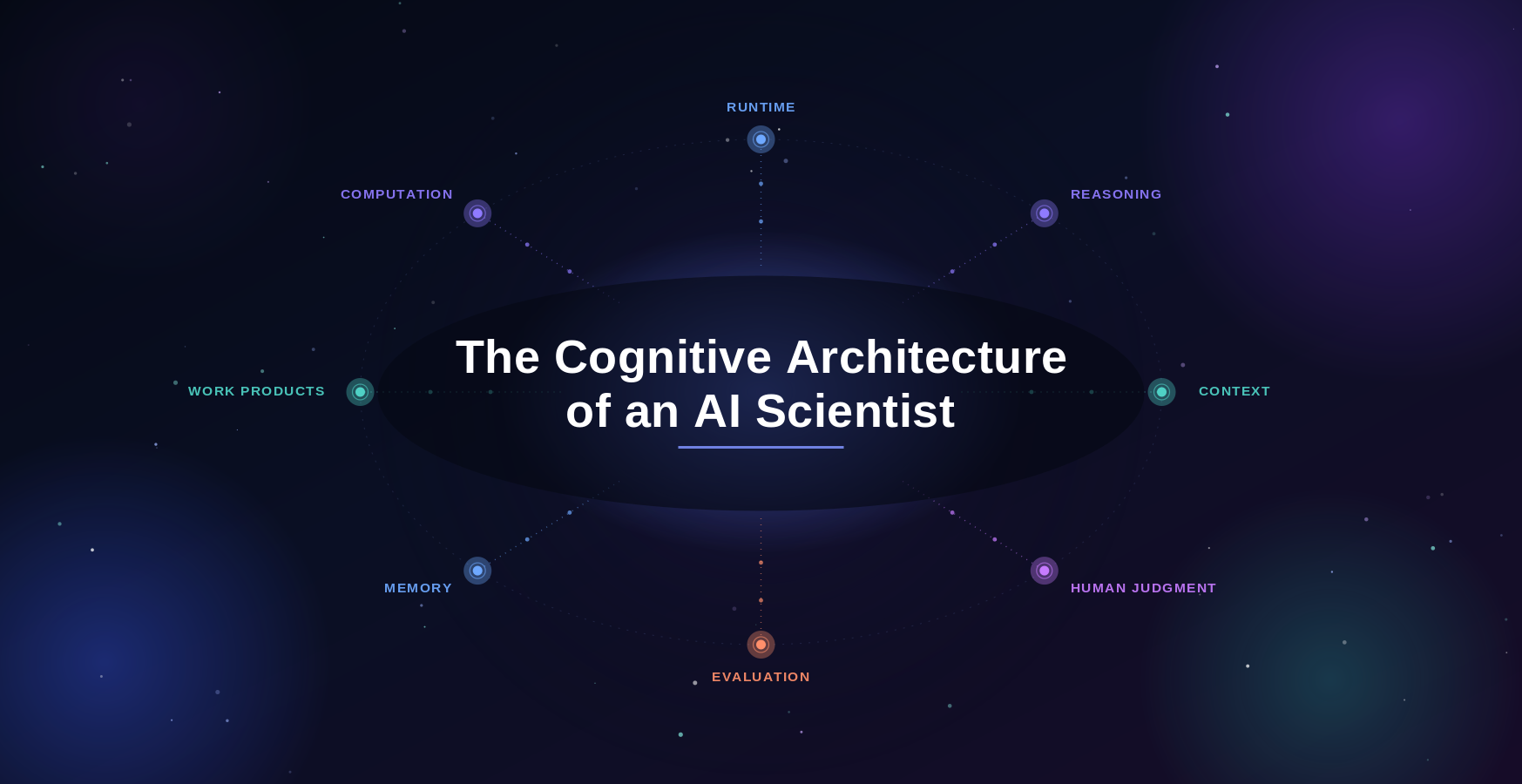
The discussion about AI scientists often begins with the model. OpenAI reports that GPT-Rosalind improved the exact pass rate on LifeSciBench from 25.7% for GPT-5.5 to 36.1%. Measuring model intelligence is an important benchmark for progress, although it cannot measure the effectiveness of an AI scientist on its own.
In the previous essay, I described why scientific computation and scientific interpretation pose different problems. An AI scientist has to perform both across one investigation. This essay examines the systems that make that possible.
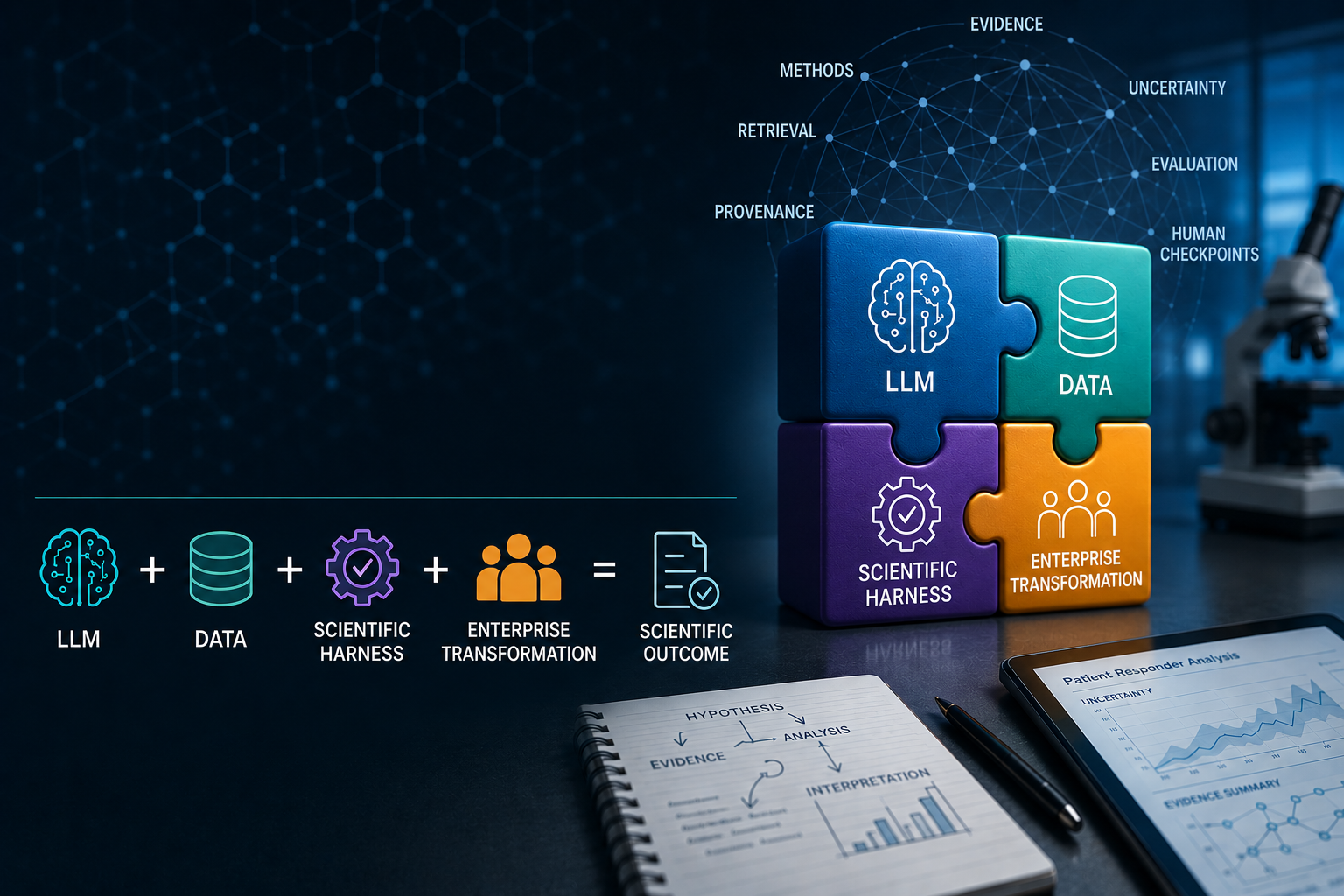
An AI scientist is a complete scientific system made of the model, its tools, and its harness. The model supplies intelligence. The harness plans the investigation, selects methods, acquires context, preserves state, evaluates quality, involves people, and produces a reviewable work product. Harness is useful language because it names the tools, data, memory, controls, and interfaces that coordinate the model. Claude Science is one recent example of the industry moving toward this broader system view.
The AI scientist is also a calibration problem across multiple subsystems:
- A planner can create a sound plan while memory drops a premise it depends on.
- Retrieval can find the right evidence while evaluation weights it incorrectly.
- A runtime can complete every step and still stop with a weak scientific position.
Model intelligence becomes effective scientific work when these subsystems remain calibrated. They must exchange context, confidence, and control signals coherently from the original objective to the final work product.
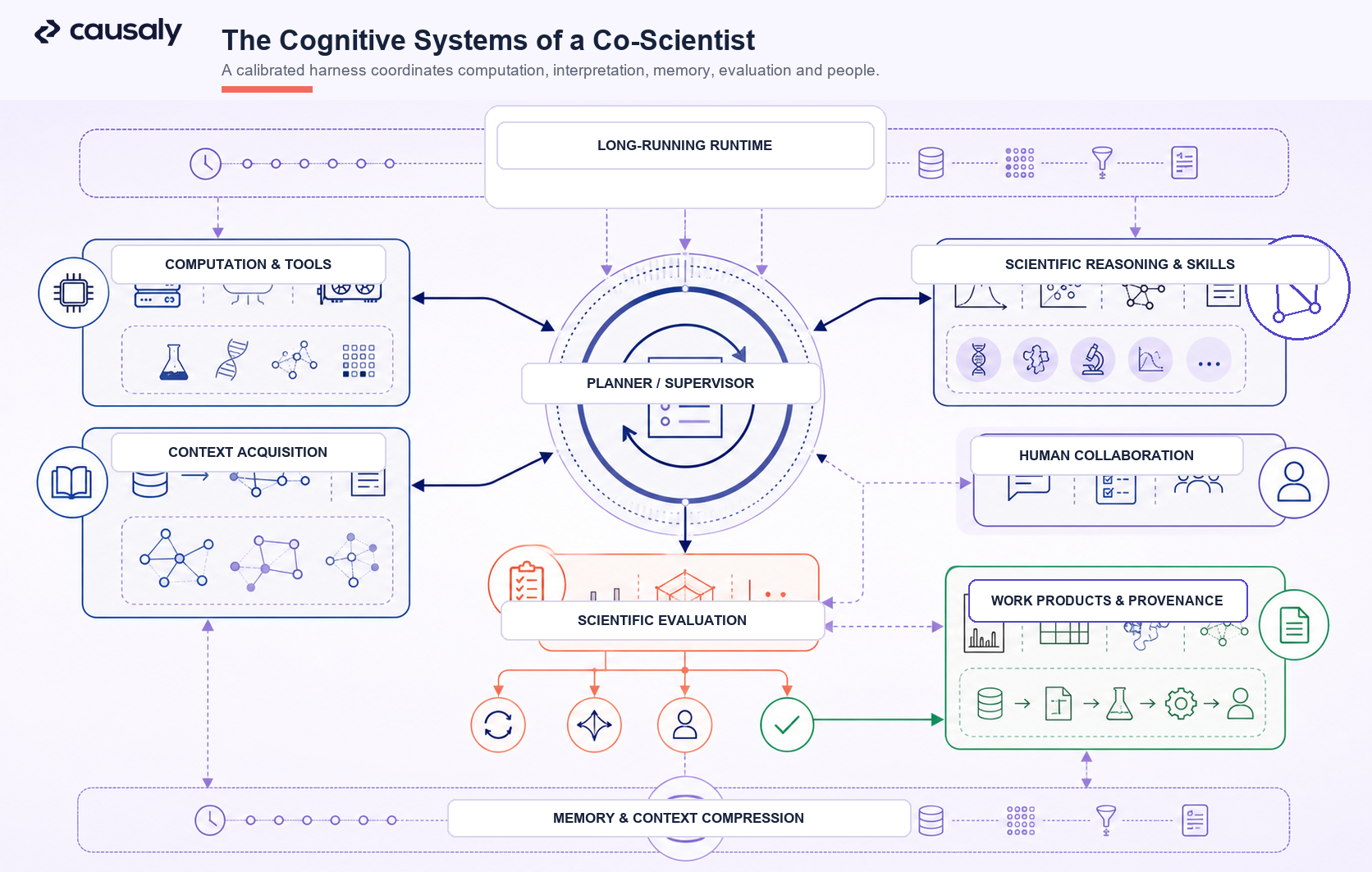
Architecture at a glance
The capability map can be grouped into four systems (see table below). To make those systems concrete, I will use one example: moving from a public psoriasis RNA-seq dataset to five reviewable target hypotheses.
The GSE54456 dataset contains RNA-seq data from lesional skin biopsies from 92 psoriasis patients and normal skin from 82 individuals. The associated study reported 3,577 differentially expressed genes, including 1,049 upregulated and 2,528 downregulated genes, and used pathway and weighted co-expression analyses to investigate immune and epidermal programs. The study aimed to understand disease mechanisms. It did not perform target nomination. The target-prioritization task in this essay is an illustrative extension: ask an AI scientist to move from the dataset and its computed signals to five target hypotheses and a reviewable memo.
That objective shows the pathway from data to signal to insight: Runtime and control carry the data analysis over hours or days. Scientific cognition interprets the genes, pathways, and co-expression modules against prior knowledge of psoriasis. Scientific judgment defines how candidates should be compared and whether the evidence is sufficient. The work product preserves the resulting position, its limitations, and its provenance.
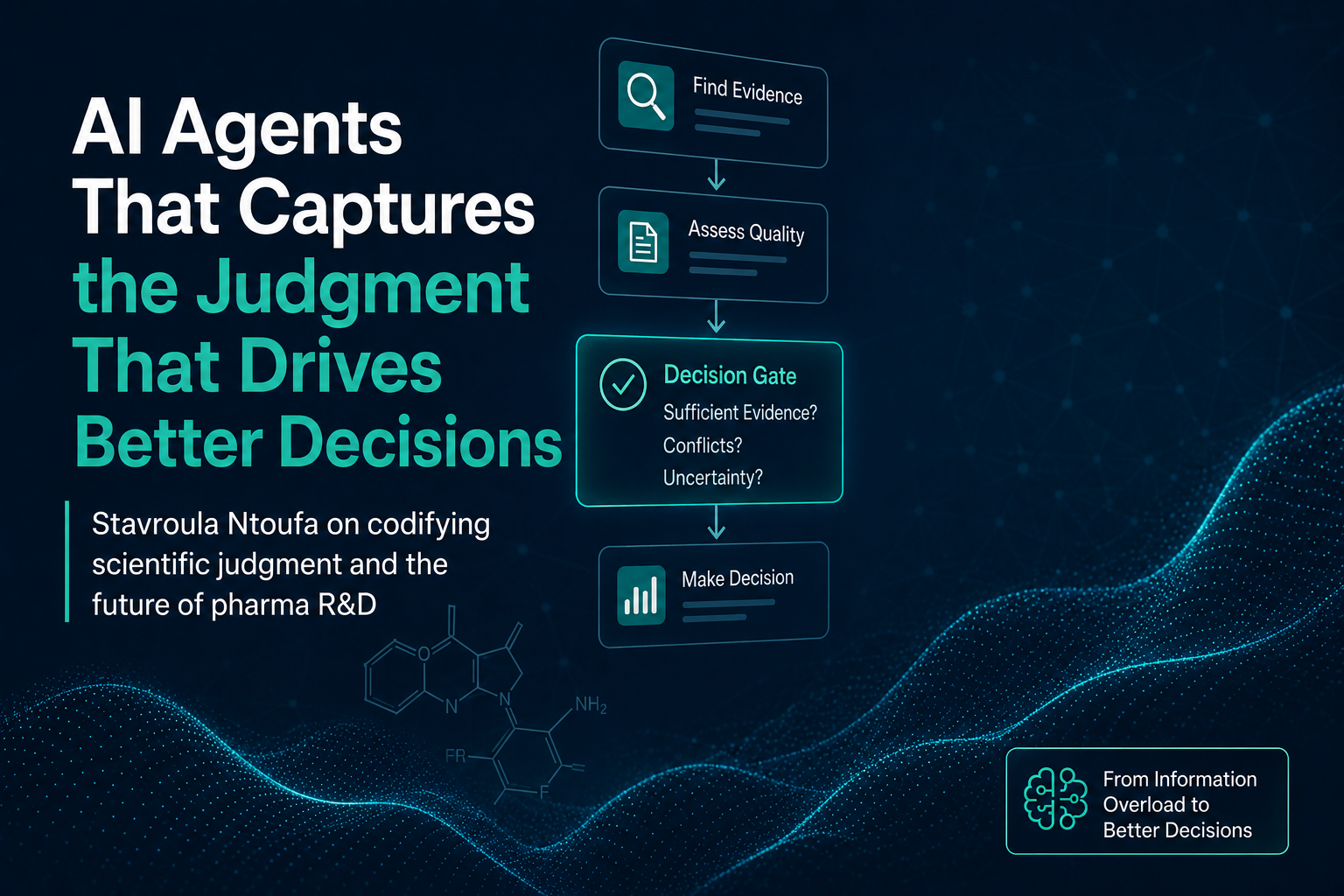
Together, these systems form the scientific harness around model intelligence. Software agents offer a useful analogy: OpenAI Codex and Claude Code place models inside harnesses that manage tools, files, execution, and feedback for software work. A scientific harness applies the same system-level idea to scientific work, with additional requirements for scientific context, methods, evidence, memory, evaluation, and human judgment. The quality of each part matters, and the harness must calibrate how they interact.
Runtime and control plane
Suppose the AI scientist receives the GSE54456 data, the experimental context, and an objective to produce five target hypotheses for psoriasis. A full run can take several hours, and broader investigations can take days. The runtime therefore needs a durable execution environment that can allocate resources, create and manage the session, run code and tools, preserve files and intermediate results, and recover from failures without losing the scientific objective.
The planner first decides what kind of analysis is possible from the available inputs. It may use the processed expression matrix or reprocess raw reads, then verify the cohort labels, study design, sample quality, and possible confounders. From there it can plan differential-expression and co-expression analyses, pathway interpretation, candidate extraction, evidence retrieval, target ranking, critique, and memo assembly. The plan stays dynamic because the data may expose a quality issue, a tissue-composition effect, or a method that does not fit the objective.
Scientific cognition: context, reasoning, and skills
The computation may produce thousands of differentially expressed genes and several co-expression modules. Those outputs are signals, not yet target hypotheses. Scientific cognition begins by acquiring the context needed to interpret them: the dataset metadata and associated paper, psoriasis disease biology, relevant pathways and cell types, human genetic evidence, known targets, safety information, competitive context, internal evidence, and connected tools. Retrieval follows the emerging questions in the analysis instead of operating as one generic search step.
Scientific reasoning then connects the computed observations to mechanisms and disease biology while preserving the difference between an observation, an inference, and a recommendation. The psoriasis study offers a useful example: dermally expressed genes were downregulated, but the authors concluded that this was probably caused by expansion of the epidermal compartment. An AI scientist should therefore avoid interpreting every downregulated gene as a causal disease mechanism or a reason to deprioritize a target. It must test tissue architecture, cell composition, directionality, and competing explanations against broader evidence.
Scientific skill primitives provide stable methods for recurring parts of this investigation. One skill can inspect an RNA-seq dataset and select an appropriate differential-expression approach. Others can assess human genetic support, mechanistic evidence or the dimensions used in target prioritization. The planner adapts these methods to psoriasis, the available data, and the objective instead of reconstructing standard practice from scratch during every run.
When the skill library lacks a suitable method, the AI scientist can retrieve current methodological evidence, compare accepted approaches, match them to the data and study design, and construct a traceable plan. In the GSE54456 example, reproducing the published 2014 analysis and selecting a method for a new target-prioritization objective are different tasks. Repeated and validated approaches can later become stable skills, creating a disciplined path from dynamic reasoning to reusable scientific operating knowledge.
Scientific memory and context compression
The API version of GPT-5.5 supports a 1.05 million-token context window, roughly 1,500 pages under an explicit text-density assumption. At about 15 pages per full-text scientific publication, that represents only around 100 papers. A typical Causaly Agentic Research run can work across evidence retrieved from 1,200 to 2,000 scientific papers in approximately ten minutes, before accounting for the GSE54456 data, code, pathway tables, candidate lists, tool outputs, hypotheses, and revisions. The psoriasis investigation can therefore exceed the model's active context long before a run lasts for hours or days.
Opening the memory for this psoriasis investigation should reveal a concrete scientific record:
As the run grows, some material can be compressed safely, including repetitive search snippets, verbose logs, and unsuccessful tool output. Other information constrains the scientific path: premises, method choices, the execution path, branches already explored, reasons a candidate was rejected, and references supporting each claim.
If compression removes one of those constraints, the investigation can diverge. The system may reopen a branch that was rejected because of a confounder, reinterpret a signal under a different assumption, repeat work, or continue down a path that no longer follows from the evidence. Scientific context compression reduces volume while preserving the decisions and evidence that determine what the AI scientist may do next.
Scientific evaluation depends on a dynamic rubric
Scientific evaluation asks whether the psoriasis investigation fulfills its objective, and it does so against a rubric. The published analysis identified 3,577 differentially expressed genes. Early computational and biological filtering might reduce that set to roughly one hundred candidates, while the team ultimately needs five target hypotheses. The rubric defines how those candidates are compared, which dimensions matter, how deeply each candidate satisfies them, and what evidence would change the ranking.
The rubric is multidimensional and depends on context. For psoriasis, it may consider human genetics, evidence that a candidate sits inside an immune or epidermal disease mechanism, relevant cell and tissue expression, directionality, safety, tractability, competitive context, and organizational fit. The weights still change with the objective. A team developing an antibody may emphasize extracellular accessibility and tissue specificity. A team seeking a genetically anchored mechanism may place more weight on human genetics and causal coherence.
Creating the rubric is therefore part of the scientific task. A general framework provides recurring dimensions, while the disease, experimental design, data type, and organizational objective determine how the rubric is instantiated for a particular run. The system must also show missing and conflicting evidence instead of hiding it inside one composite score.
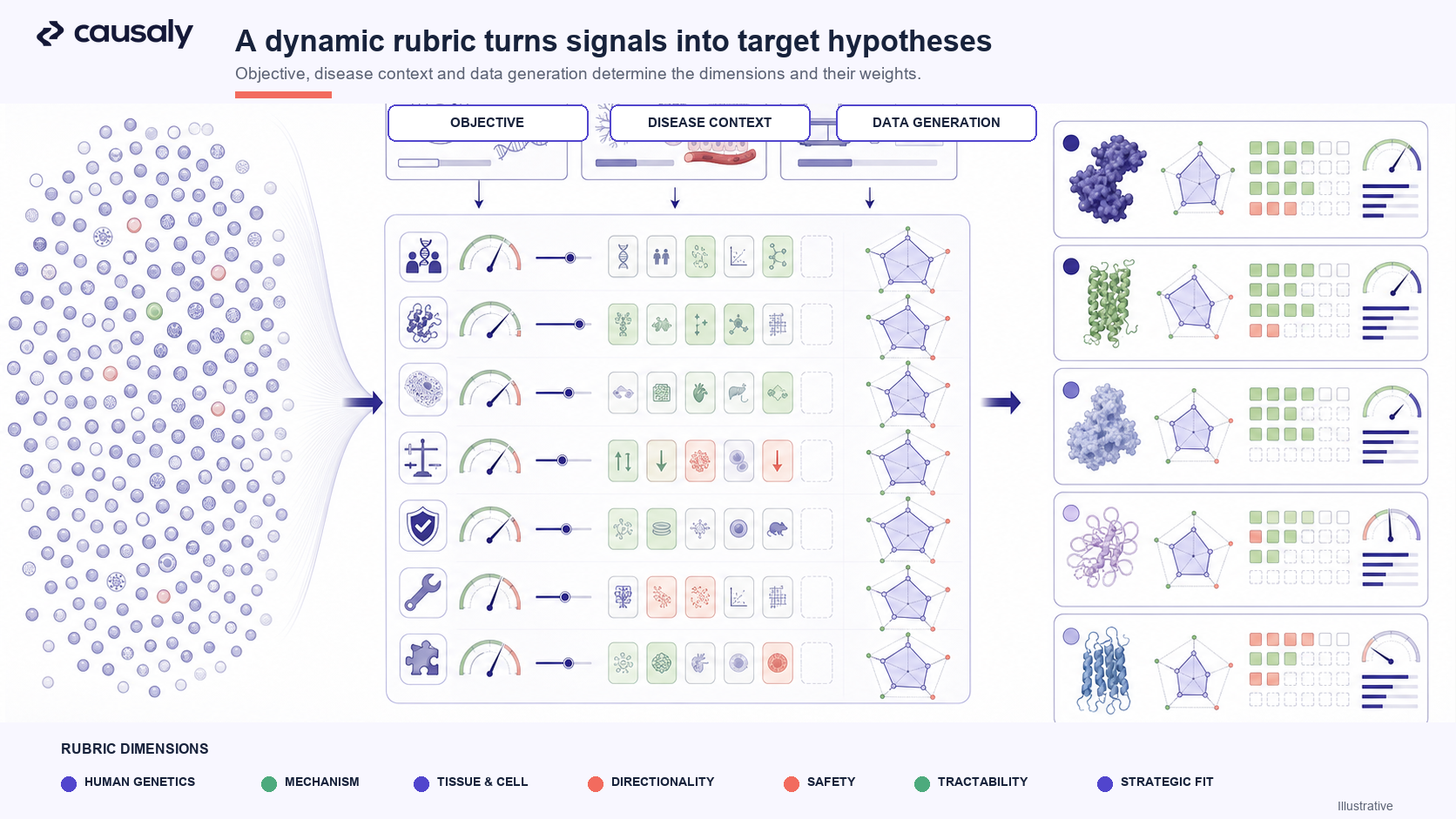
The rubric evaluates two fundamentally different transitions described in the previous essay. Data-to-signal evaluation asks whether the GSE54456 study design, sample quality, analytical method, statistical assumptions, and resulting module signals are robust. Signal-to-insight evaluation asks whether those observations support a psoriasis mechanism, whether tissue architecture or another explanation remains credible, and whether the evidence justifies advancing a candidate as a target hypothesis.
As the AI Scientist runs the evaluation against the rubric it determines next steps: rerun an analysis, retrieve another evidence type, compare a competing explanation, reduce confidence, ask a scientist, or finalize. Search coverage is part of this decision, because a convincing target rationale can still be incomplete when an important evidence dimension has never been examined.
Human judgment adds organizational context
Consider the checkpoint before the AI scientist finalizes five psoriasis target hypotheses. A scientist may decide that human genetic evidence should carry more weight, that a signal associated mainly with changing tissue composition should be downgraded, or that a candidate compatible with the company's antibody capabilities should rank above one requiring an unfamiliar modality. They may exclude a target that failed in a previous internal program or ask the system to investigate a safety concern that is well known inside the team but absent from public data.
Those decisions combine scientific judgment with tacit organizational knowledge, strategic objectives, platform capabilities, prior successes and failures, and practical constraints. Human intervention lets the scientist change the rubric or challenge the interpretation at the point where their knowledge has the greatest leverage. The system then carries those decisions forward into the target ranking and the rationale behind it.
Work products and provenance make the result reviewable
The final work product is a psoriasis target-prioritization memo. It should follow a stable structure covering GSE54456 and its experimental context, methods and parameters etc. that can reflect the standards the company already uses for target review.
The reader must be able to inspect how every part of that memo was produced. Sentence-level provenance should connect each material statement to GSE54456, a computational result or the associated publication. A reviewer can then challenge the evidence and trace a conclusion to its source to understand why the system placed one target above another.
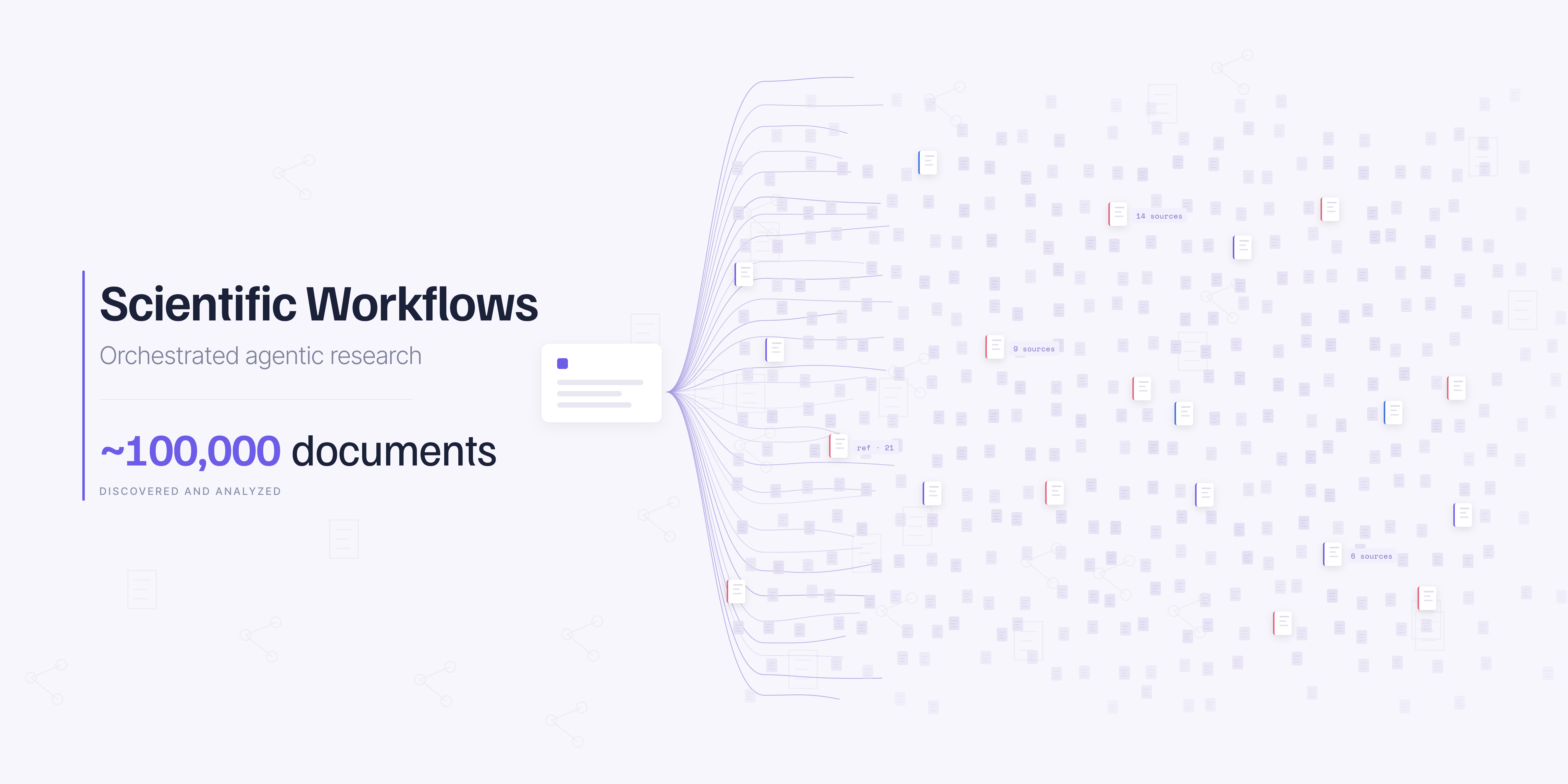
A decision-ready scientific output exposes both the position and the conditions that could change it. Once the capability is trusted, Scientific Workflows can place it inside a repeatable organizational process with approved inputs, review roles, required work products, sign-off, and archival.
The harness makes the AI scientist operational
The GSE54456 example shows why an AI scientist depends on distinct cognitive systems. Runtime and control sustain the analysis. Context acquisition, reasoning, and skills turn transcriptomic signals into a scientific position. Memory preserves the premises and branches that shaped it. Evaluation and human judgment determine whether five targets can be recommended. The final memo makes the position reviewable through stable structure and provenance.
The effectiveness of the AI scientist comes from both the capabilities of these systems and the way they are calibrated. The harness coordinates the model, tools, evidence, memory, evaluation, and people so that a change in one part of the investigation is reflected across the rest. That coordination turns model intelligence into operational scientific work.
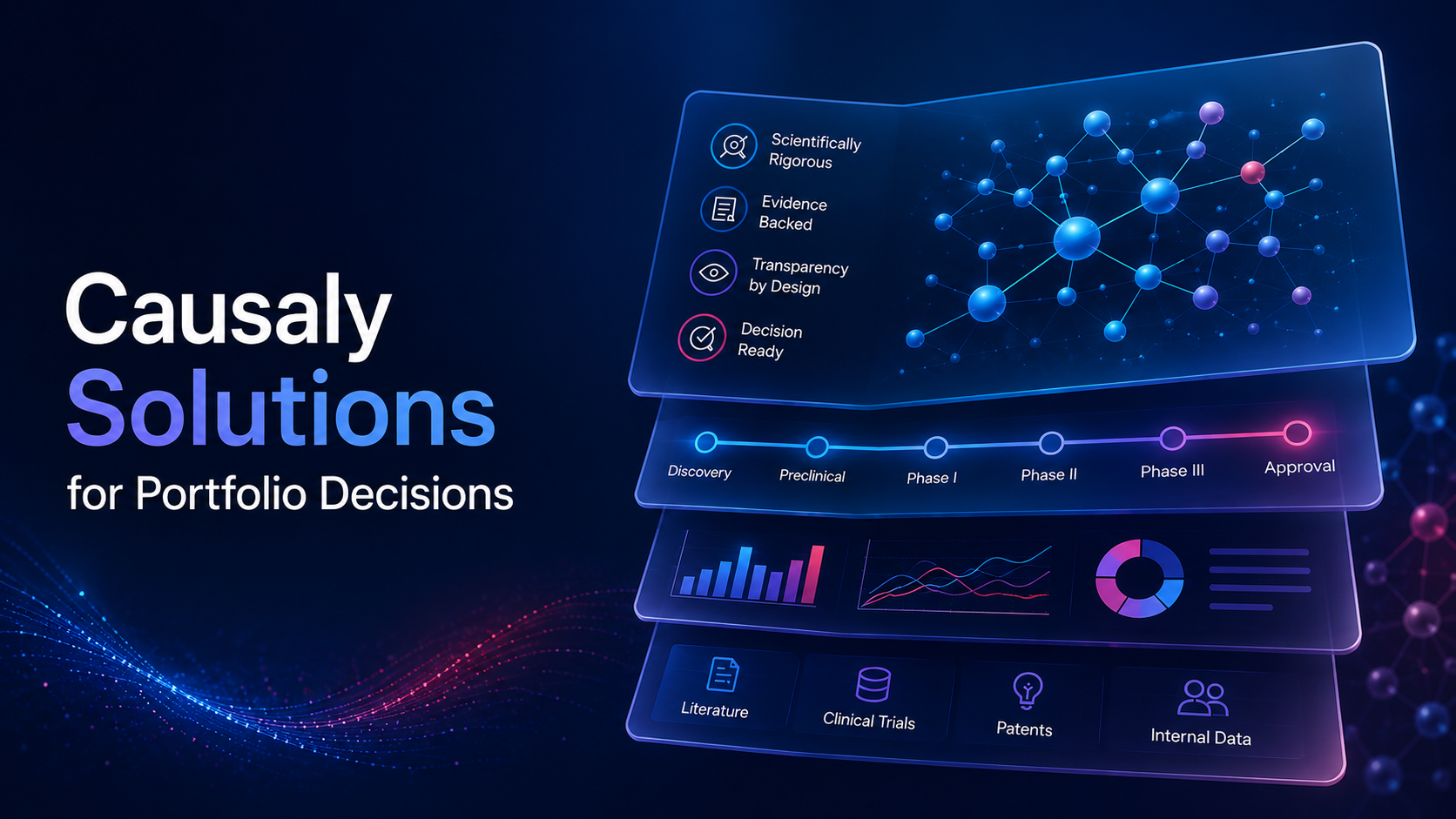
Causaly already provides much of the scientific context and reasoning foundation through Bio Graph, Pipeline Graph, scientific information retrieval, Agentic Research, causal inference, internal-data connectivity, and MCP interfaces. The architecture described here connects those capabilities to long-running computation, scientific state, evaluation, human judgment, and reviewable work products.
The architecture is broad, so implementation has to begin somewhere and improve iteratively. The next essay will examine where to start and how a focused scientific problem can develop the general AI scientist one capability at a time.
Further reading



Get started with Causaly
Ready to transform the way your R&D teams discover and deliver? Take the first step - see Causaly for yourself.
Request a demo