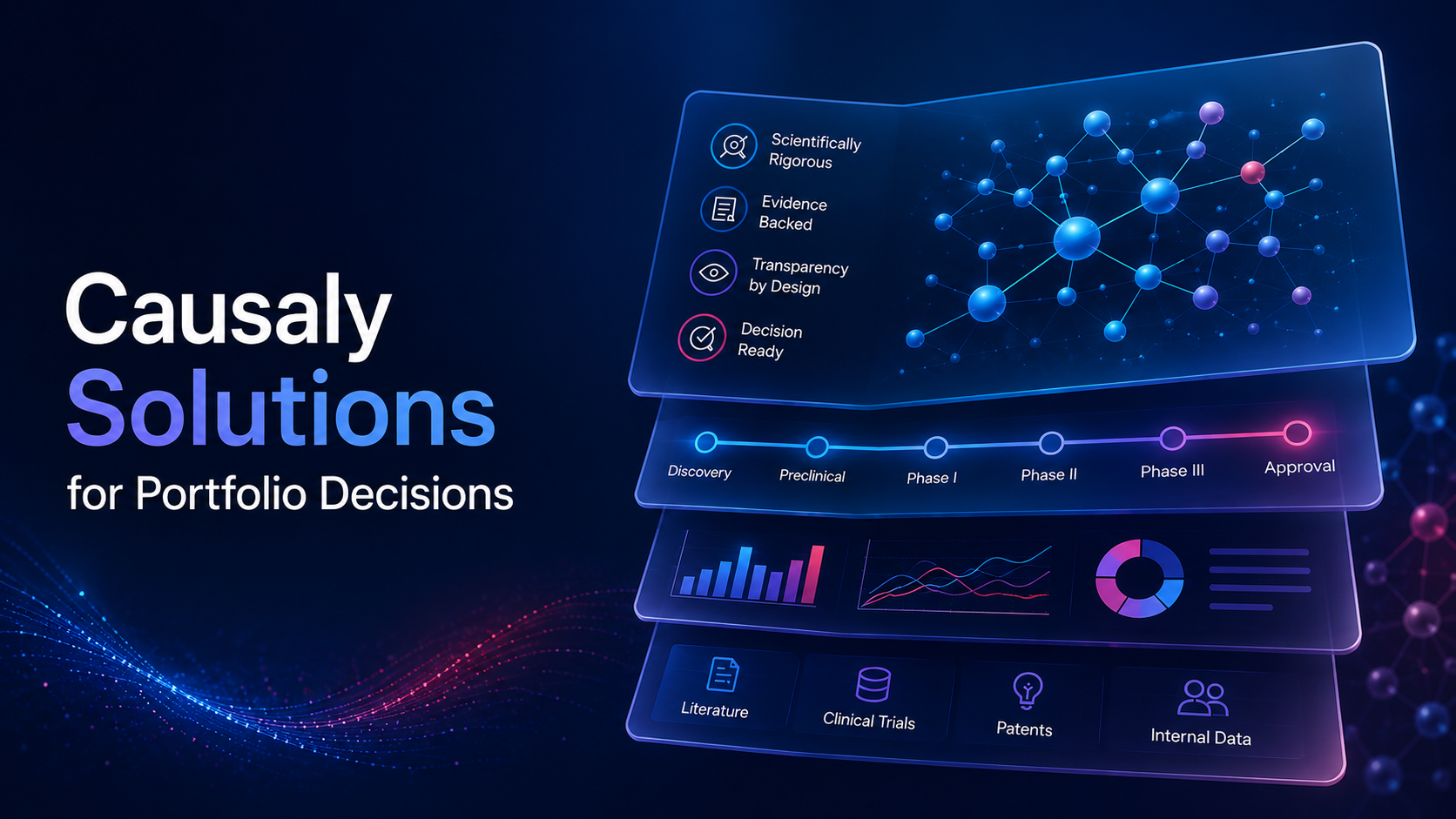
How Causaly's Scientific Workflows turn weeks of competitive analysis into cited, board-ready assessments.
SOPs provide rigor, but manual execution limits speed and scale. Causaly’s Scientific Workflows use coordinated AI agents to deliver the same rigor with greater speed, breadth, and scalability.
Pipeline investment decisions are among the most high-stakes that a pharmaceutical company makes, with millions, and sometimes billions, on the line. While the decisions may sit with a few decision-makers, the content they review to support each choice is compiled by hundreds of experts.
A key factor in pipeline decisions is the competitive landscape around an asset. The development team must compile information from clinical trial registries, peer-reviewed publications, conference disclosures, regulatory records, and company communications that collectively amount to a textbook on the subject. Assembling that body of knowledge manually consumes weeks of specialists' time.
Producing this body of knowledge reliably enough to support a governance board's decisions requires teams to follow Standard Operating Procedures (SOPs), dividing the work into defined steps where each contributor owns a bounded question and every finding is recorded against a shared standard. Causaly's Scientific Workflows apply that same discipline to a team of agents.
How the Work Divides, and Where an Agent Drifts
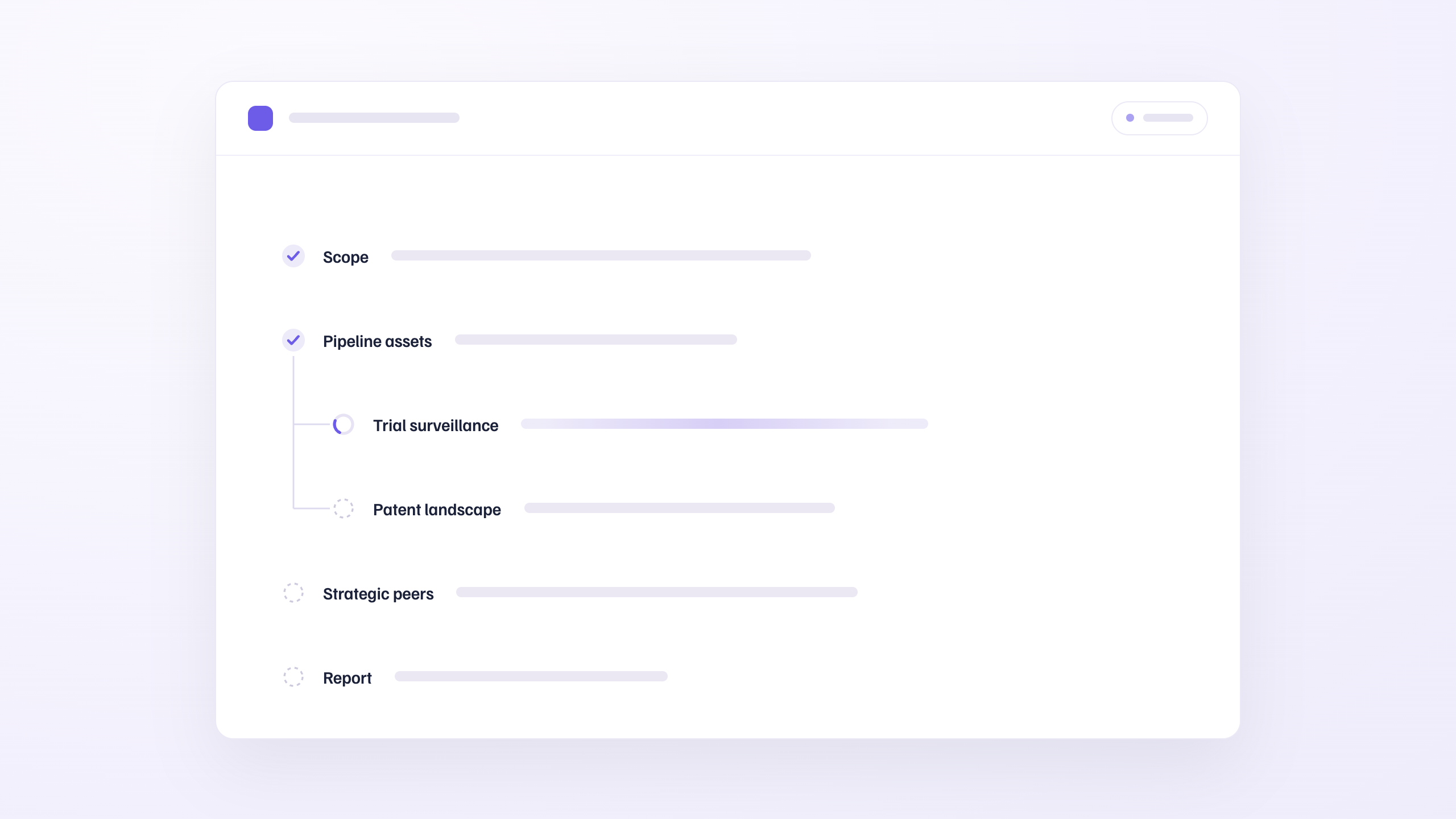
A competitive intelligence report can be broken down like any other SOP. Scope the question, identify the pipeline assets that compete, survey the trials behind each one, map the patent position, place the strategic peers, then assemble the report. The first of those steps is well-bounded. Identifying the drugs that compete for the same patient population is a task that an agent equipped with Causaly's knowledge graphs and search tools can complete with high recall, because the boundaries of the question are clear and the underlying sources are already organized.
The next step is to triage these assets and evaluate whether they are relevant competitors based on a set of well-defined criteria. With general LLMs, the set of standards can hold for the first few candidates, but as the list grows, an agent left without a defined structure drifts from one asset to the next, applying inconsistent criteria along the way. A reviewer is then unable to tell whether a competing asset was excluded on its merits or overlooked in the volume of the task. The resulting assessment cannot be used to support a go/no-go decision with confidence.
When the standard of assessment varies across competing assets, the errors run in both directions. An asset with a differentiated mechanism can be graded as unremarkable because the analyst who reviewed it applied less thorough criteria, and a crowded field can appear more open because a late-stage competing asset was recorded without the detail that would have revealed its position.
Structured Reasoning as a Guardrail
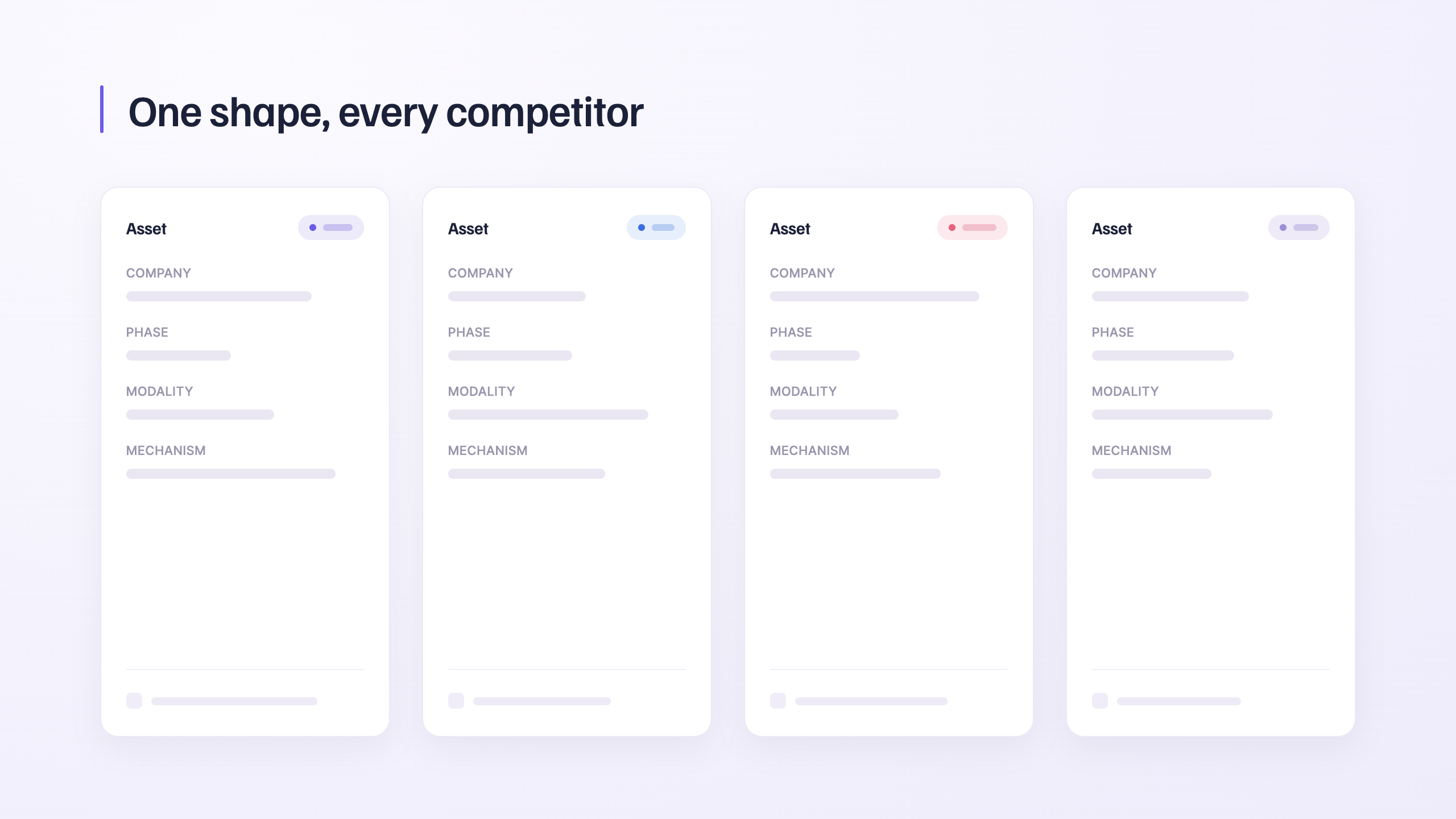
Scientific Workflows require each agent to reason within a defined structure. The output of every step conforms to a consistent form before any downstream work begins. When the first agent produces a structured dataset in which every competing asset is described along the same dimensions, each subsequent assessment passes to a downstream agent operating under identical instructions, so the twentieth competing asset receives the same scrutiny and the same criteria as the first.
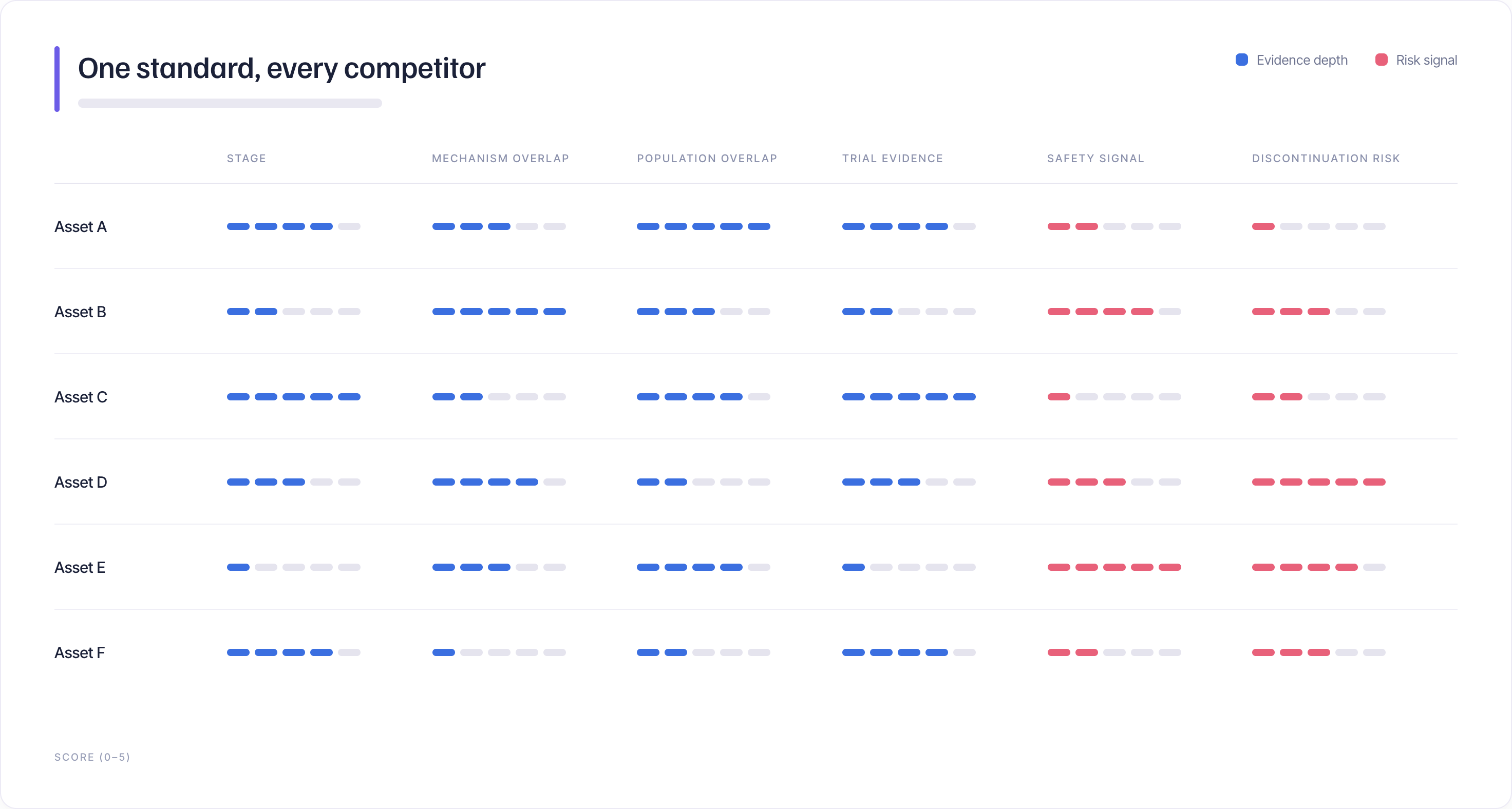
Structured reasoning functions as a guardrail for the model that generates each response, constraining it to record its conclusions in a form that remains comparable across assets and coherent across the entire landscape. The effect is similar to the difference between a team that files its findings on a common template and a team in which each member writes a free-form memo, because only the first produces a body of work that can be compared line by line and trusted as a whole. A board reviewing the results can see why one competing asset was ranked above another, challenge the reasoning where it wishes, and revisit the assessment as new data arrives without having to reconstruct the analysis from the beginning.
A defined form also makes the dataset computable. The engine can count the assets that meet a stated condition, partition the landscape by development stage or modality, and rank programs by a score the team defines, and those calculations return the same answer every time they run.
Mapping the Landscape Around a Target
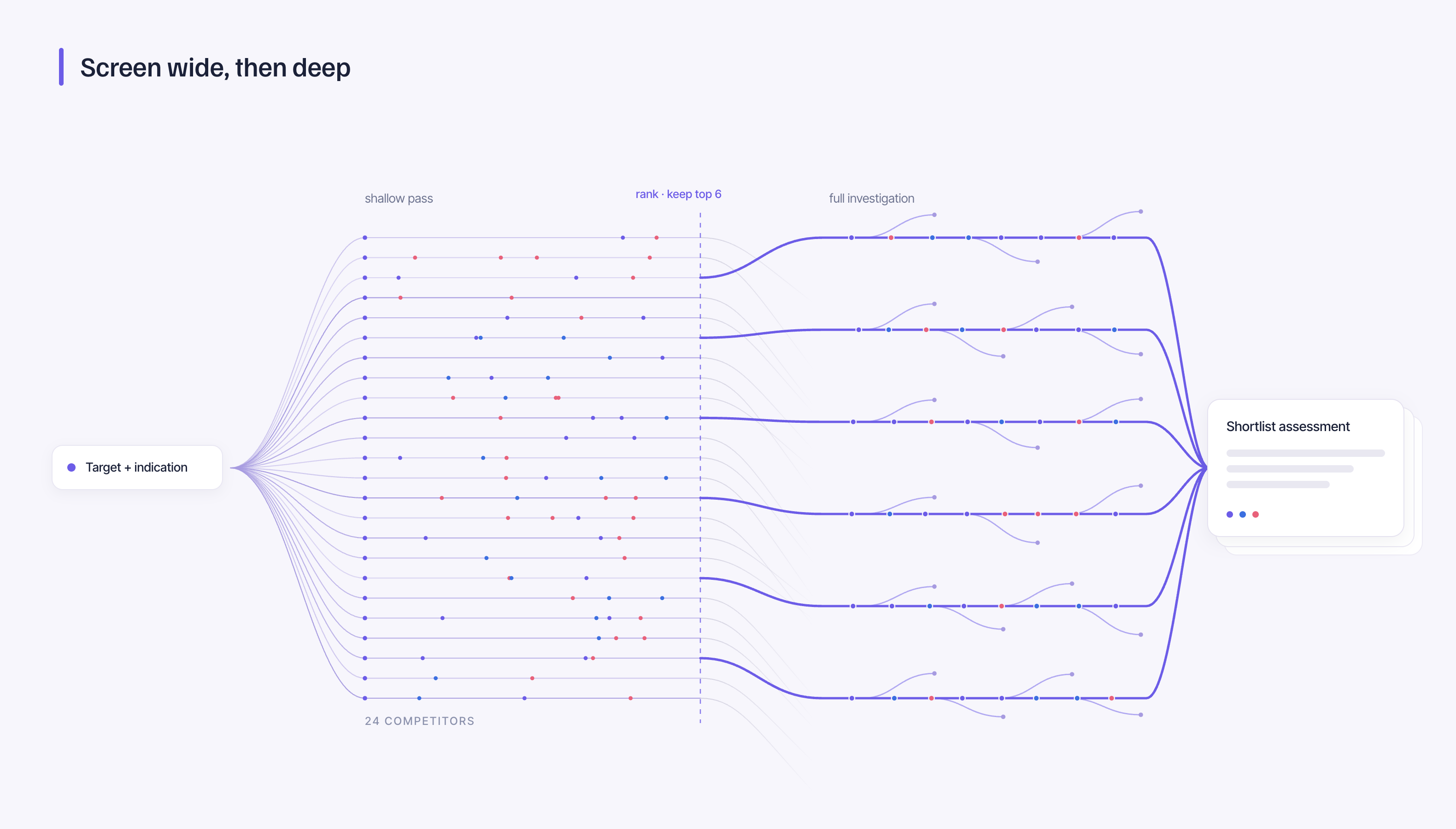
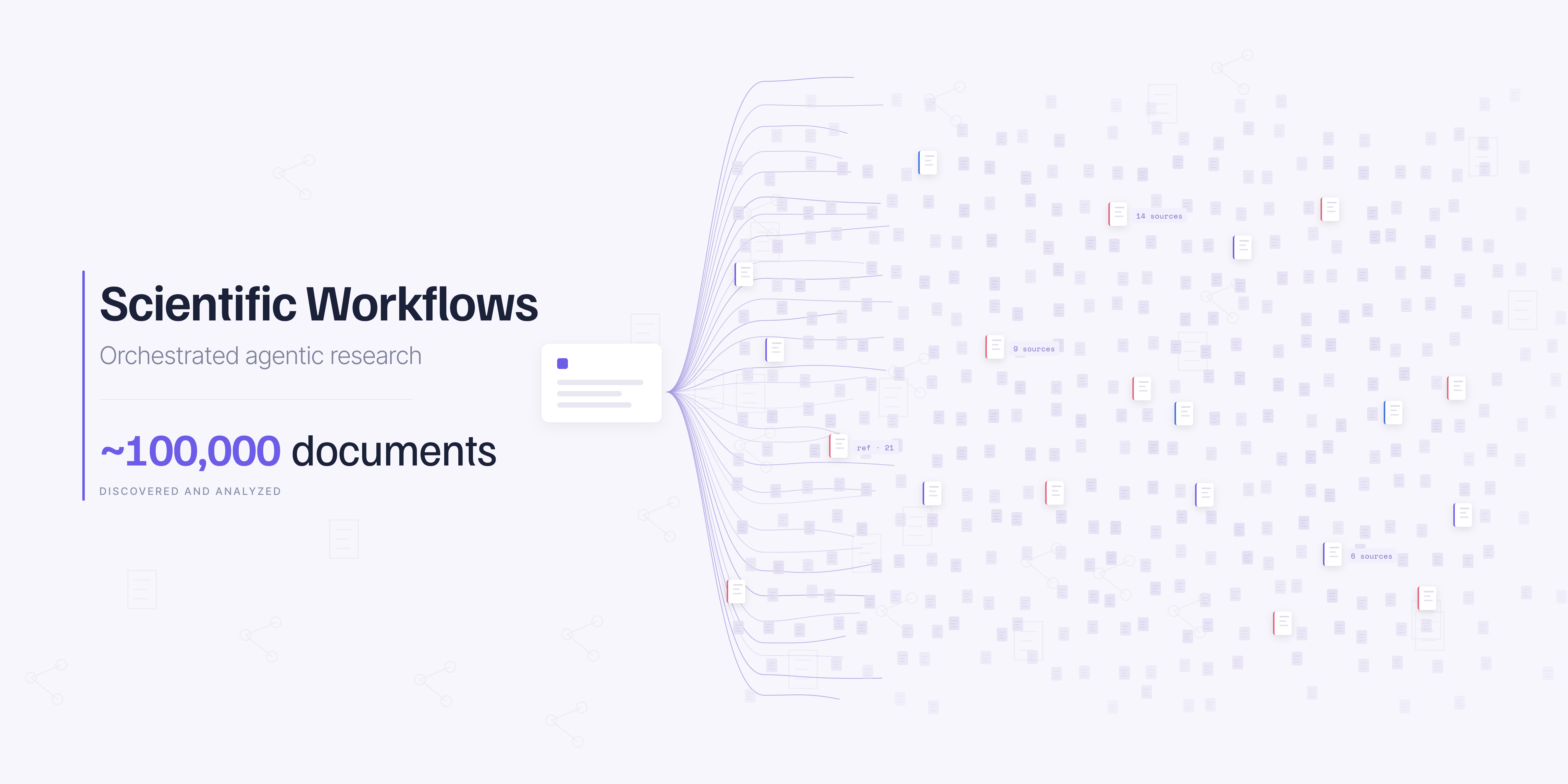
Consider a team weighing whether to pursue a target that several other companies have already tried and failed to develop against. The workflow begins by identifying every asset that acts on that target, along with programs that compete for the same patients through a different mechanism, and it records each one along a common set of dimensions that includes the company developing it, the stage of development, the modality, and the mechanism of action. A run of this kind can read across roughly 100,000 documents.
Those records are enough to rank the field. The workflow scores every asset on the evidence collected in that first pass, keeps the handful that carry the most weight in the decision, and releases the rest with the reason for each exclusion recorded against it. Out of a hundred programs in the landscape, only the dozen that could change the decision then receive the full, in-depth investigation, without the same effort going to programs that were never contenders. The teams set that gate themselves, filtering on whatever criteria they define.
Each remaining asset then receives its own focused investigation. The agent verifies those facts against current sources and searches for public readouts across the full arc of the asset's history, checking the stages where evidence is often thin, such as early preclinical work or a discontinuation that received little public notice, and running additional searches to close those gaps.
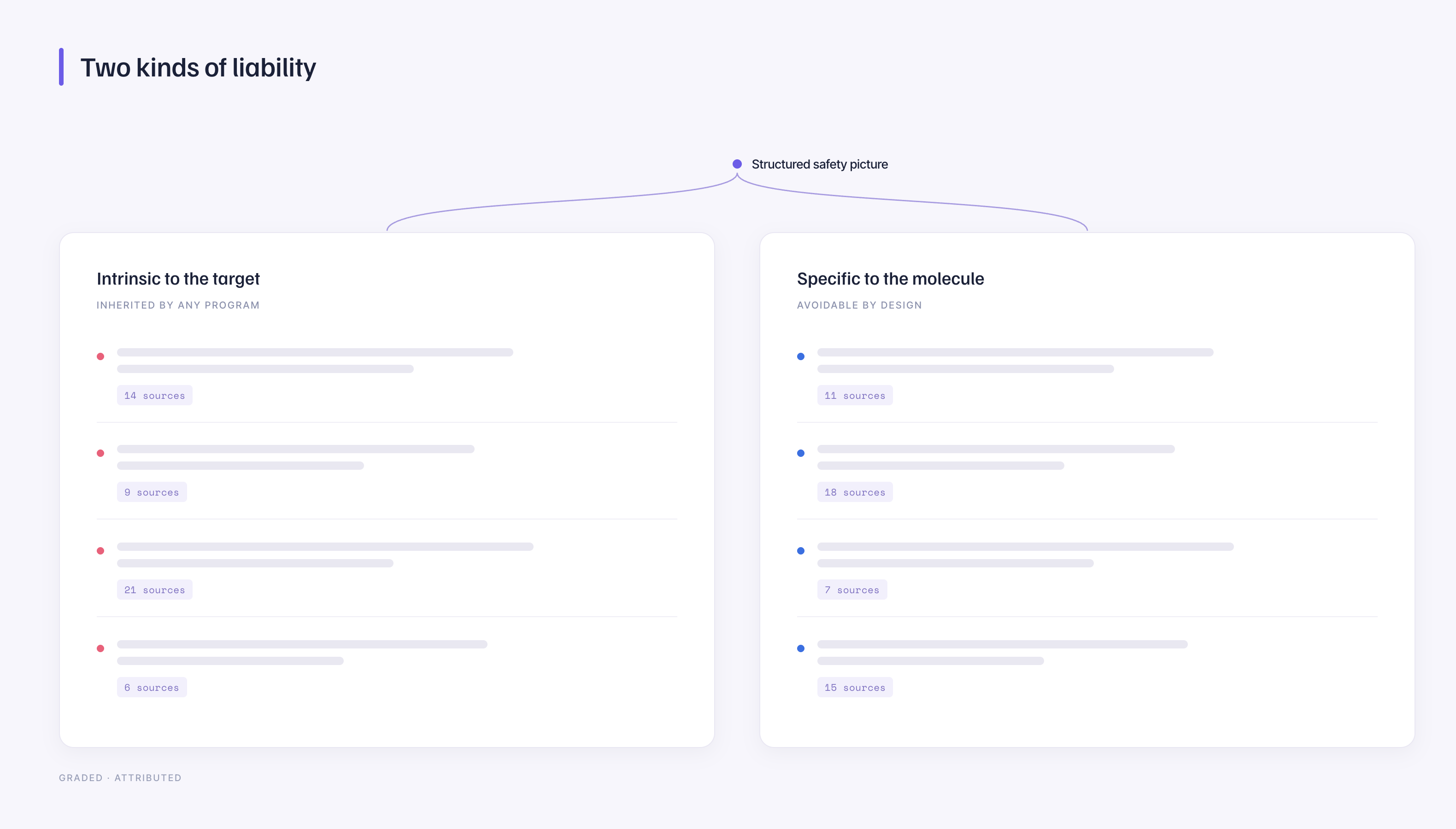
For each readout, the agent retrieves and summarizes the substantive content, preserving the reported figures and the source of each one. It then consolidates those summaries into a structured safety picture that separates liabilities intrinsic to the target from liabilities tied to a particular molecule. The former would follow any program regardless of how the drug is built, whereas the latter could be avoided by a new design. That distinction changes what a team does next, because an intrinsic liability argues against the target itself while a molecule-specific one argues for a different chemical series. The output is a board-ready assessment in which every competitor is described the same way, every safety signal is graded and attributed, and every figure traces back to the trial or publication that produced it.
Evidence and Provenance Carried With Every Claim
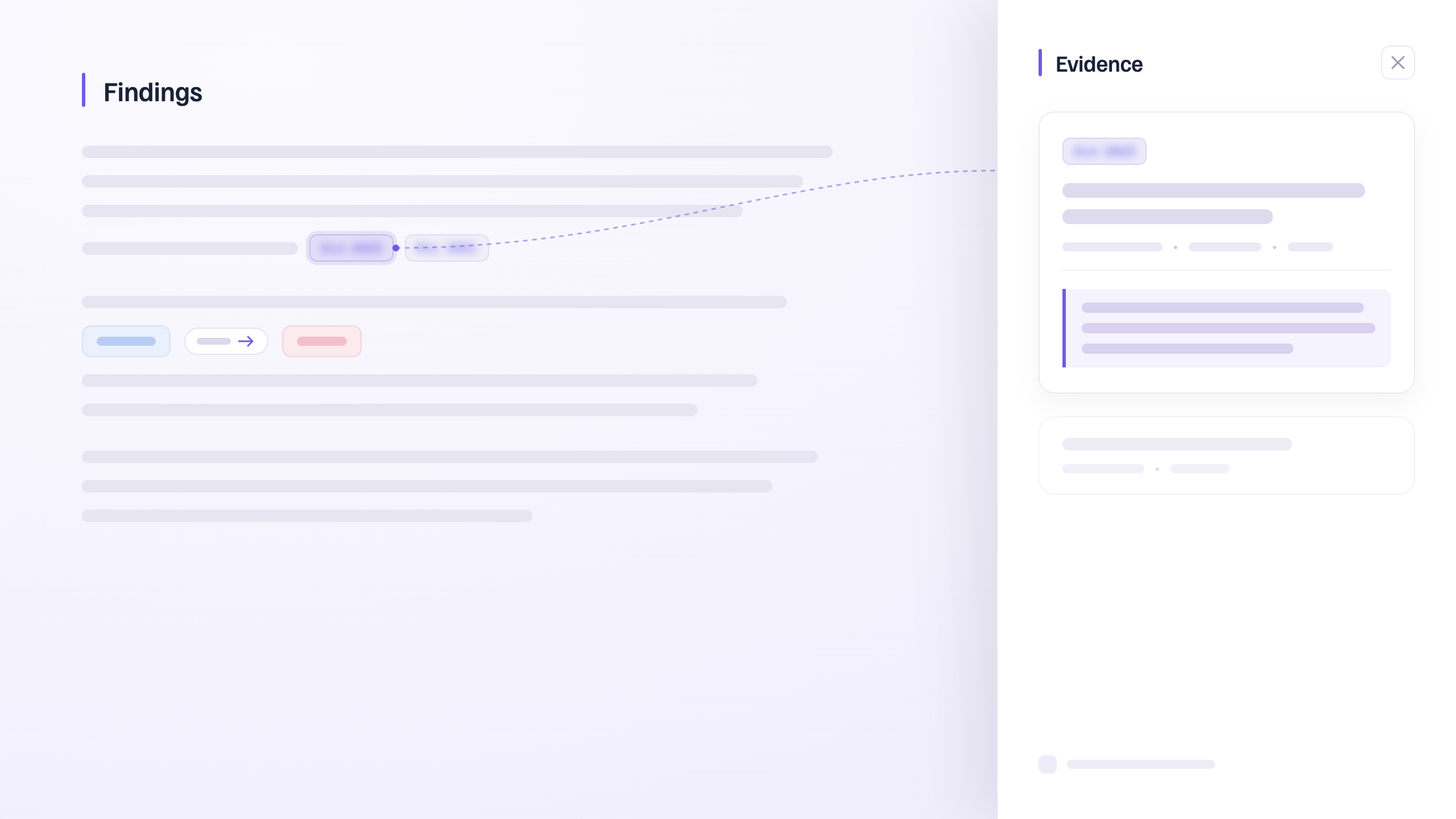
Consistency alone would not earn the confidence of a scientific reviewer, so each claim in the structured dataset is supported by evidence from Causaly's data fabric, knowledge graphs, and trusted MCP connectors. Because citations travel with the claims through each stage of the workflow, a scientist can follow a provenance trail from a statement in the final report back to the original study, the specific trial, or the regulatory document that established it. A reviewer who questions a particular conclusion can examine the evidence directly instead of accepting the conclusion on trust, and a conclusion that cannot be traced to a source is visible as such.
Navigating a Completed Body of Knowledge
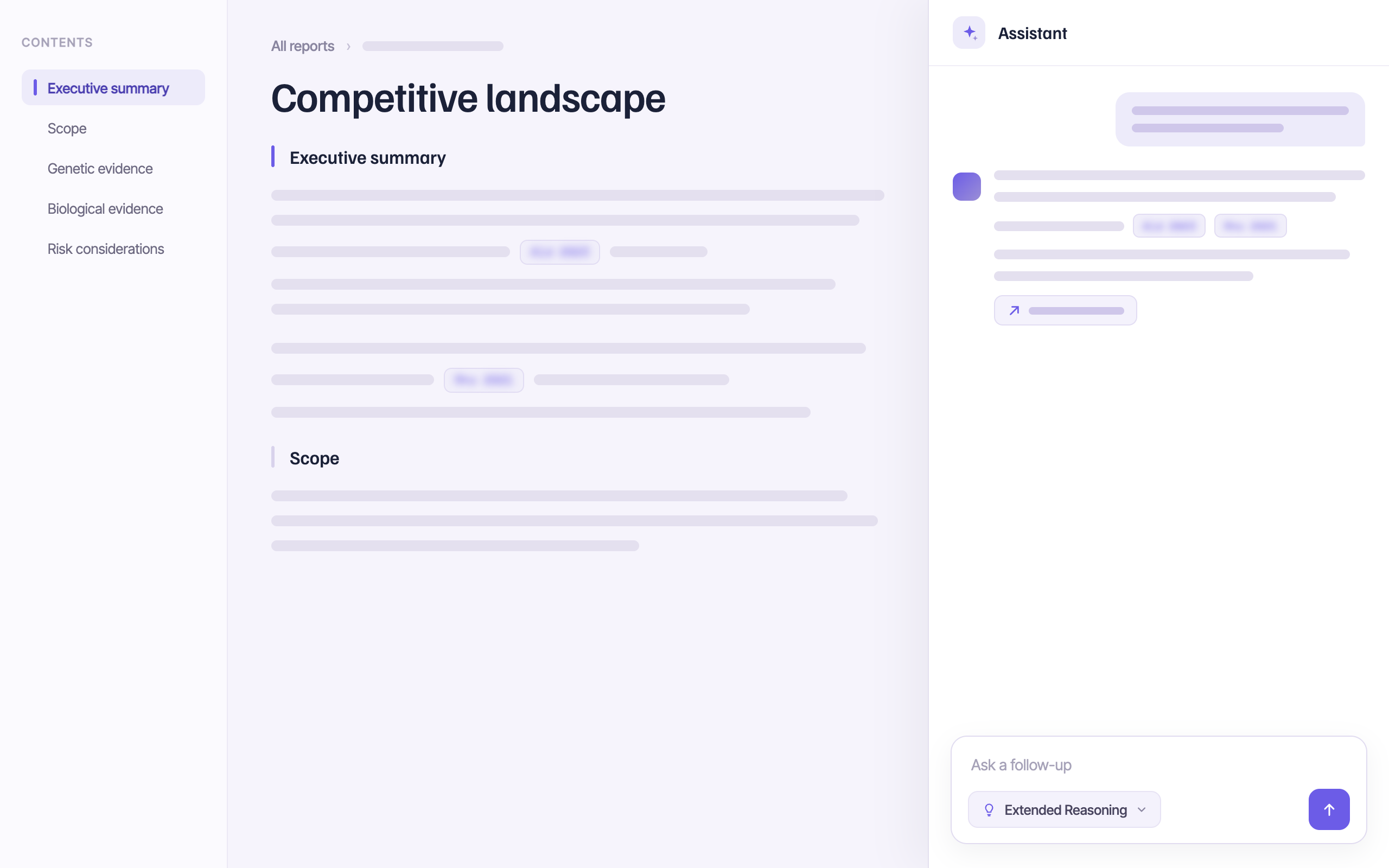
When the workflow completes, the textbook now exists, and the practical need shifts toward asking informed follow-up questions and retrieving the most relevant facts about the asset and its competitors. Placing an entire body of research into a model's context window and expecting a dependable answer produces inconsistent results. Scientific Workflows instead let an agent navigate the content the way a scientist would, locating the relevant sections, cross-checking the original evidence, gathering additional evidence where a question demands it, and returning an answer in minutes that withstands scrutiny. A director who asks how a particular safety signal compares across three competitors receives a response that points to the specific findings behind it, so a static report becomes a resource that continues to answer questions as a decision develops.
Collaboration Across Teams and Departments
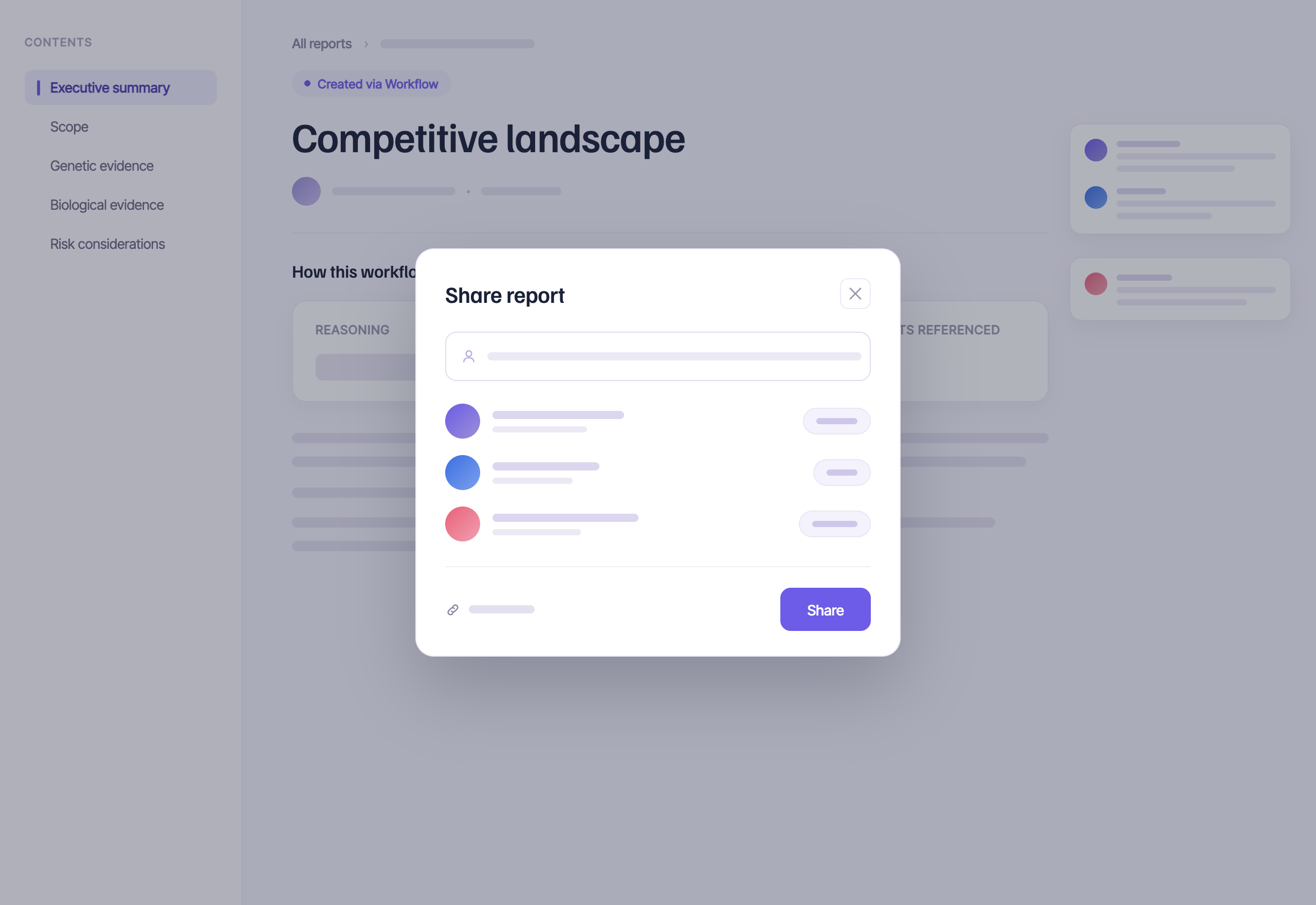
Decisions that carry this much risks are made by teams and across departments. A detailed report can be shared with colleagues and with a governance board, and it keeps its underlying evidence within reach, so anyone can dig into the specific trials, publications, or disclosures behind any conclusion instead of taking the synthesis on faith. That same follow-up used to mean locating whoever ran the original analysis, sometimes months earlier, and waiting days for them to retrieve the work and respond. Now the same evidence base returns an answer in real time, and a question raised in commercial strategy can be checked against the exact sources that informed the clinical assessment. That kind of cross-check only works because commercial and clinical are drawing from the same dataset. Without that shared dataset, each department ends up maintaining its own version of the landscape, and the result is reconciliation meetings and conflicting numbers that slow high-stakes decisions and erode confidence in the underlying work.
Structured Reasoning Within Existing Research Standards
The research processes that pharmaceutical teams have refined over decades reward the qualities that structured reasoning preserves, namely consistency across a large body of evidence, traceability from every conclusion to its source, and the discipline of grounding each claim before it is recorded. Those are the qualities an SOP exists to enforce. Structured reasoning brings the speed and reach of agentic systems into those processes without asking a team to relax the standards that make its conclusions defensible.
Reach out to our team to see how a structured, scientific workflow can codify your competitive assessments and other key scientific research processes that drive go/no-go decisions.
Further reading
.png)
.png)
.png)


Get started with Causaly
Ready to transform the way your R&D teams discover and deliver? Take the first step - see Causaly for yourself.
Request a demo