Building the AI Co-Scientist for the Hardest Part of Science
A true co-scientist must connect two fundamentally different capabilities: constrained computation and causal reasoning across incomplete scientific knowledge.

The industry is converging on the idea of an AI scientist, even if the label and scope are not yet consistent. Google's AI co-scientist is a Gemini-based multi-agent system for generating and refining hypotheses and research proposals. Edison Scientific calls Kosmos an AI Scientist for autonomous, data-driven discovery. Benchling describes The AI Scientist as wiring together the digital and physical worlds of R&D, connecting structured data, predictive models, and experimental work. Anthropic calls Claude Science an AI workbench for scientists that integrates research tools, produces auditable artifacts, and manages access to computing resources.
These systems use different language and emphasize different capabilities, which is why the market needs a clearer definition of what a co-scientist should be able to do.
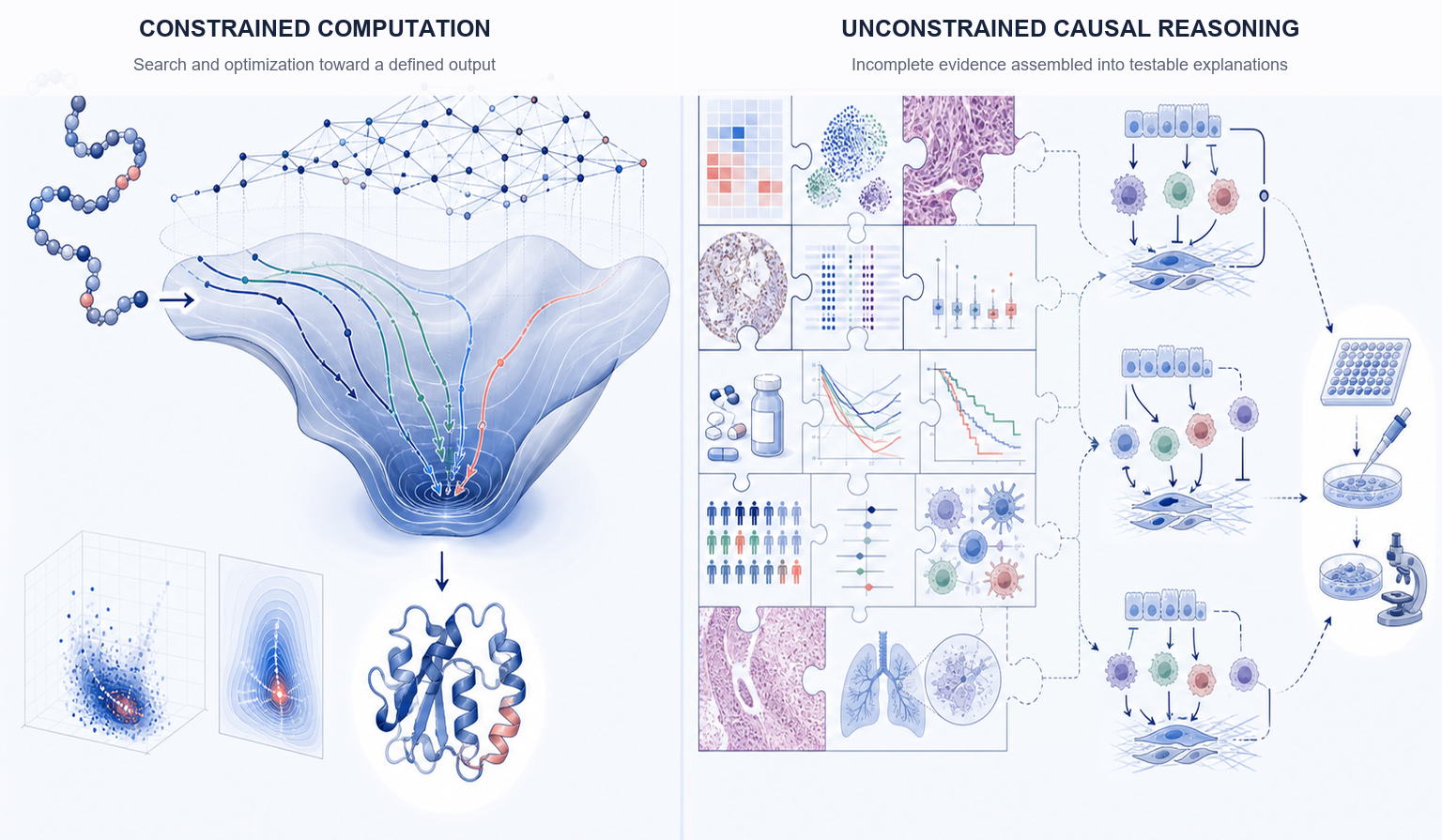
Fig 1: Protein-structure prediction resembles navigation toward a specified output; fibrosis treatment-response reasoning resembles detective work across incomplete evidence and competing explanations.
The best way to understand the fundamental capabilities of a co-scientist is to compare two scientific questions:
- Given an amino-acid sequence, what three-dimensional structure will the protein adopt?
- Why do some patients with fibrosis respond to a drug while others do not, and what should the development team do next?
Both are difficult scientific questions, but their problem structures are different. The protein question resembles navigation across an enormous terrain toward a defined destination. The input and desired output are specified, candidate structures can be evaluated against learned geometric and biological constraints, and the system can narrow the space of possibilities. It is primarily a search, inference, and optimization problem with a defined output.
The fibrosis question resembles detective work. The relevant clues are distributed across experimental data, patient biology, prior literature, and clinical context. Some clues are missing, several explanations may fit what is known, and the scientist must decide which pieces belong together. The problem is like a jigsaw puzzle, but with more than one plausible arrangement. The work is to construct and challenge testable explanations from an incomplete context, then identify the new observation that would distinguish them.
Constrained versus unconstrained problem spaces
In this blog, constrained and unconstrained describe relative problem structures, since every scientific problem is constrained to some degree. Protein-structure prediction converges toward a specified object that can be evaluated, while treatment-response reasoning must assemble heterogeneous evidence into competing causal explanations and determine what could distinguish them.
Fig 2: Constrained computation narrows a vast search toward a specified output; causal reasoning assembles incomplete clues into explanations that can be challenged.
Protein-structure prediction is one of the most consequential achievements in modern computational biology. AlphaFold frames structure prediction as graph inference in three-dimensional space, using learned representations of sequence and residue relationships to predict a structural model. Modern systems do not enumerate every possible conformation. They reduce the effective search space and produce a candidate structure that can be assessed through confidence estimates, benchmark performance, and comparison with experimentally determined structures.
The fibrosis question has a different structure. Fibrosis can arise from different injuries and etiologies. A review of fibrosis biology and an analysis of experimental liver-fibrosis models show why the active mechanism and the relevance of a model depend on the biological context. More broadly, human genetics can help distinguish causal from reactive target relationships, functioning as one source of evidence among several and not as a definitive answer on its own.
A development team observing that some patients respond to a drug while others do not must therefore consider disease stage, active mechanism, tissue context, prior treatment, drug exposure, comorbid biology, and the measurements used to define response. For example, a molecular signature could identify causal biology, reflect a downstream consequence, track drug exposure, or mark a correlated patient characteristic. The evidence does not arrive with labels that tell the scientist which interpretation is correct. The team must find the relevant pieces and determine which explanation they support.
Then the next logical step is to form a hypothesis. If A appears to influence B, and B appears to drive C in a particular patient context, a scientist may hypothesize that changing A will alter C. But, this is not always the case.
Two problem types require two capability sets
Because the two problems are fundamentally different, a co-scientist needs two corresponding capability sets. Much of the current market discussion emphasizes the computational side more strongly than the other. Systems may be excellent at running tools, writing code, searching large spaces, or optimizing toward a specified output without yet being equally strong at deciding which biological context matters and constructing a causal explanation from incomplete evidence. Coding capability remains an important primitive, but it is not the whole architecture.
The work product for the fibrosis team should be a reviewable scientific position including which mechanism best explains the differential response, which patient subgroup the explanation applies to, what supports and contradicts it, which alternatives remain credible, and what evidence would change the recommendation. This is what takes a system beyond computation without diminishing the importance of computation itself.
Why are unconstrained scientific problems harder
Like the detective introduced earlier, the scientist has to find and understand the clues before deciding which story they support. The scientist is not forcing every puzzle piece into the first coherent story. The scientist is laying out the competing stories, identifying the clue on which they disagree, and choosing a test that could change which story is most credible.
A response-associated signal can support several explanations. Responders may have target-dependent biology that the drug successfully modifies. Nonresponders may have inadequate exposure despite sharing the same mechanism. A parallel immune process may sustain disease even when the intended target is engaged. Each explanation can fit part of the observation and lead to a different next step. The evidence matrix in the figure below helps piece those clues together and makes the reasoning inspectable.
Its rows are observations, and its columns are competing hypotheses. Each observation can support a hypothesis, weaken it, remain compatible with it, or leave the relationship uncertain. The purpose is to prevent the system from presenting only the evidence that fits its preferred answer, expose uncertainty, and show where the explanations make different predictions.
The discriminating experiment follows from those differences. If target engagement is confirmed in both responders and nonresponders, inadequate exposure becomes less plausible. If nonresponders still show an immune activation program, a parallel mechanism becomes more plausible. Testing the target and immune pathway separately and together in matched models can then reveal which explanation better predicts the observed phenotype. The next experiment is selected because its possible outcomes would update the ranking of the hypotheses.
Fig 3: Rows represent observations and columns represent competing explanations. The matrix identifies the evidence gap where the leading explanations make different predictions. The next experiment should produce a result that strengthens one hypothesis and weakens another. In this example, matched patient-derived models control drug exposure and perturb the target and immune pathway separately and together, with pathway state and remodeling assessed against prespecified criteria.
This reasoning requires scientific retrieval, evidence normalization, context selection, memory, and evaluation. Search coverage and stopping logic matter because a coherent mechanism may change when a missing body of evidence is introduced.
The capabilities this series will examine
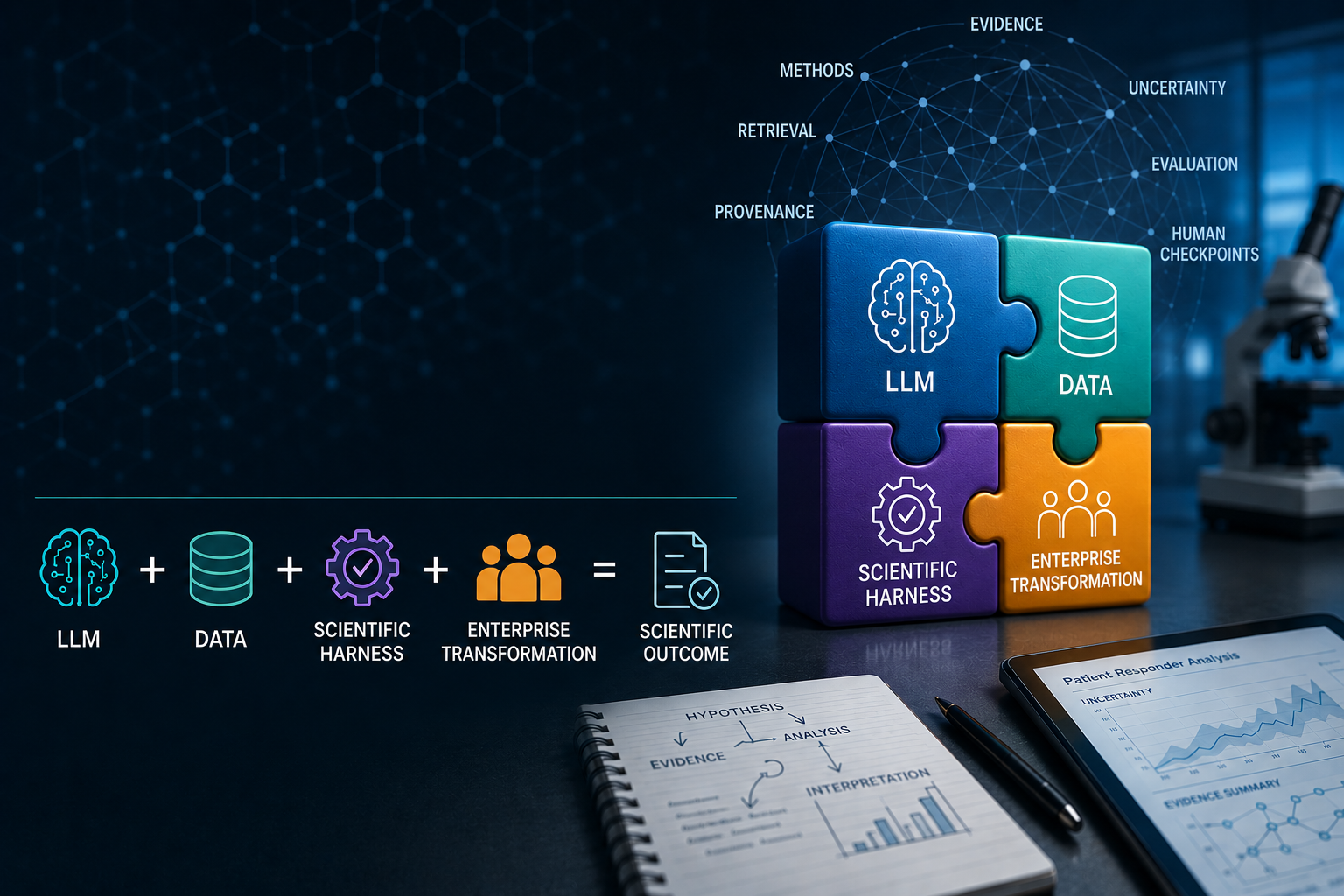
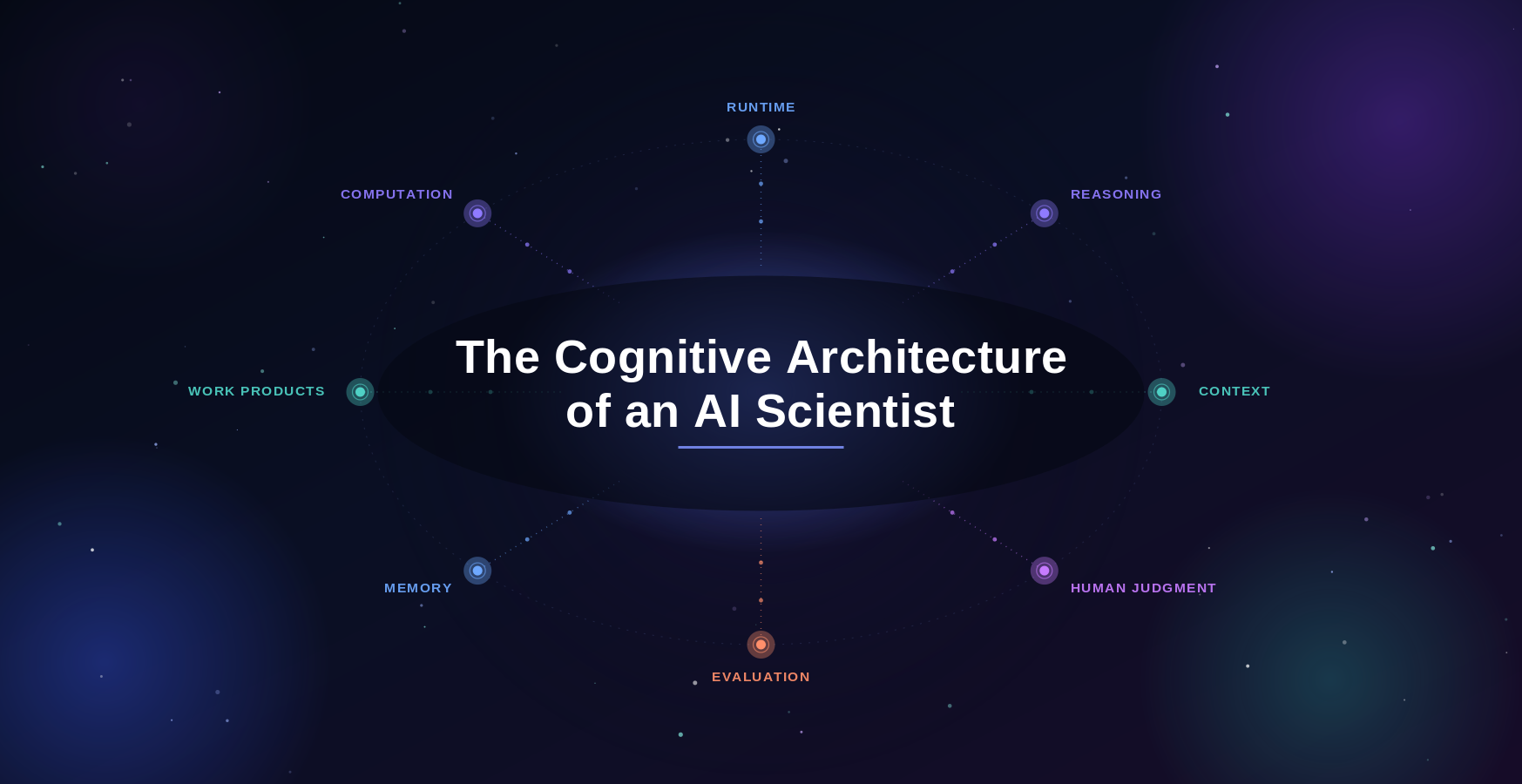
A long-running agent or a strong foundation model is only one component of a co-scientist. The wider architecture requires computation, scientific retrieval, knowledge graphs, provenance, episodic and semantic memory, context compression, causal reasoning, evaluation, scientific discourse, and governed execution. These capabilities allow the system to carry the path from a reproducible result to a challengeable scientific interpretation.
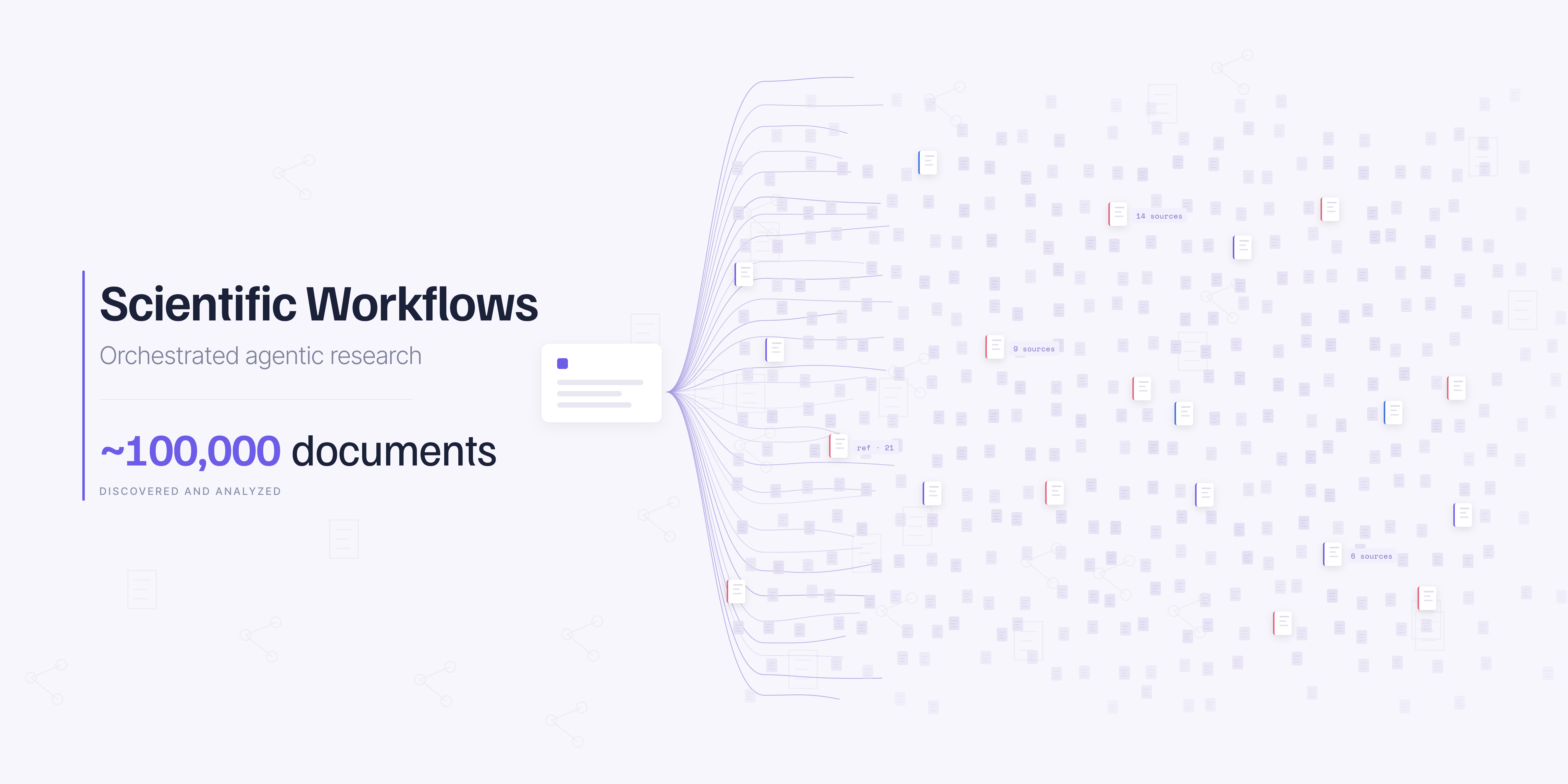
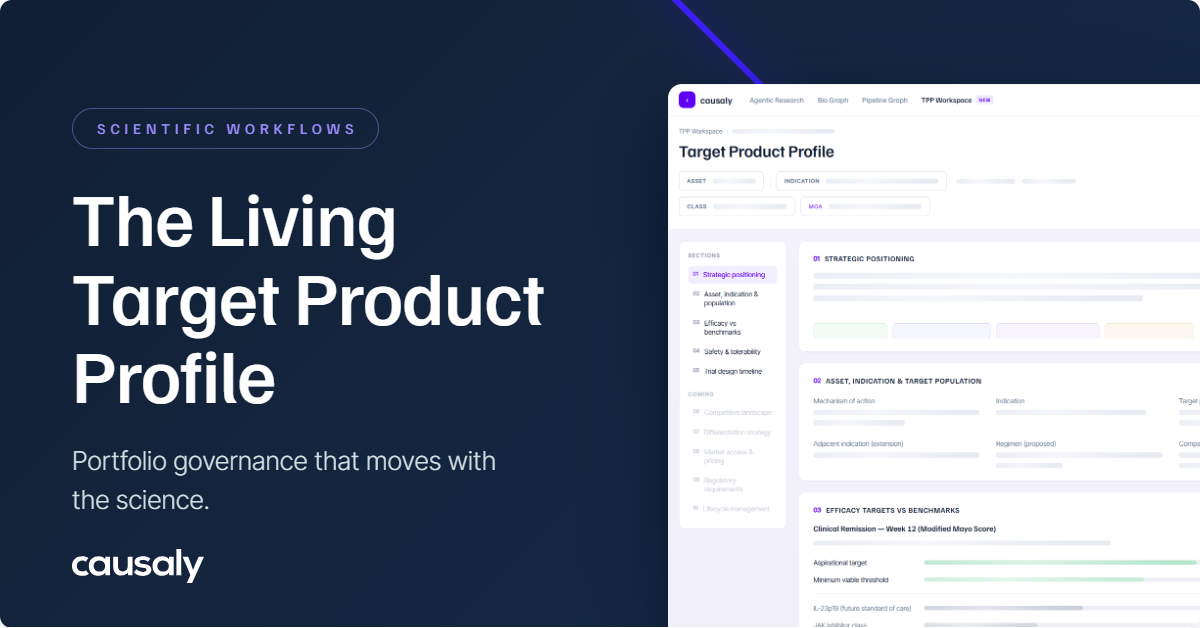
The rest of this blog series will examine those capabilities in detail. It will explain the cognitive architecture of a co-scientist and why scientific AI needs a different harness from a generic agent. Once a work loop is validated, Scientific Workflows can make its methods, checkpoints, and review artifacts repeatable.
Questions R&D leaders can ask today
The quickest way to understand a system's current capability is to test it with both problem types and inspect what it leaves behind:
- Can it solve a specified computational task such as protein-structure prediction, preserve its inputs and parameters, and produce a reproducible result that can be evaluated against a defined target?
- Can it explain why fibrosis patients respond differently by selecting the relevant context, comparing causal hypotheses, showing supporting and contradictory evidence, and proposing an experiment whose result would change the recommendation?
The first task is similar to navigating a vast landscape toward a specified destination. While the second resembles scientific detective work in which the clues are incomplete, and several arrangements remain plausible. They require different capabilities and different system designs. A system that performs the first task has valuable computational capability. A system that can also carry the second task through evidence, causal reasoning, falsification, and human review is beginning to operate as a co-scientist. That distinction should define the category and the standard by which the market evaluates it.
The next post in this series examines these capabilities in more depth. To see how Causaly applies this reasoning to a specific target or indication, request a demo.
Further reading



Get started with Causaly
Ready to transform the way your R&D teams discover and deliver? Take the first step - see Causaly for yourself.
Request a demo