From Retrieval to Reasoning: How AI Can Meet Scientific Standards in R&D
.png)
In an earlier blog, I stated that scientific information retrieval is the foundation for any trustworthy AI in R&D. If the system cannot reliably find the right pages across literature and internal data, reasoning cannot work. Many teams try to jump straight to “reasoning” and complex workflows, while retrieval remains underspecified and unmeasured.
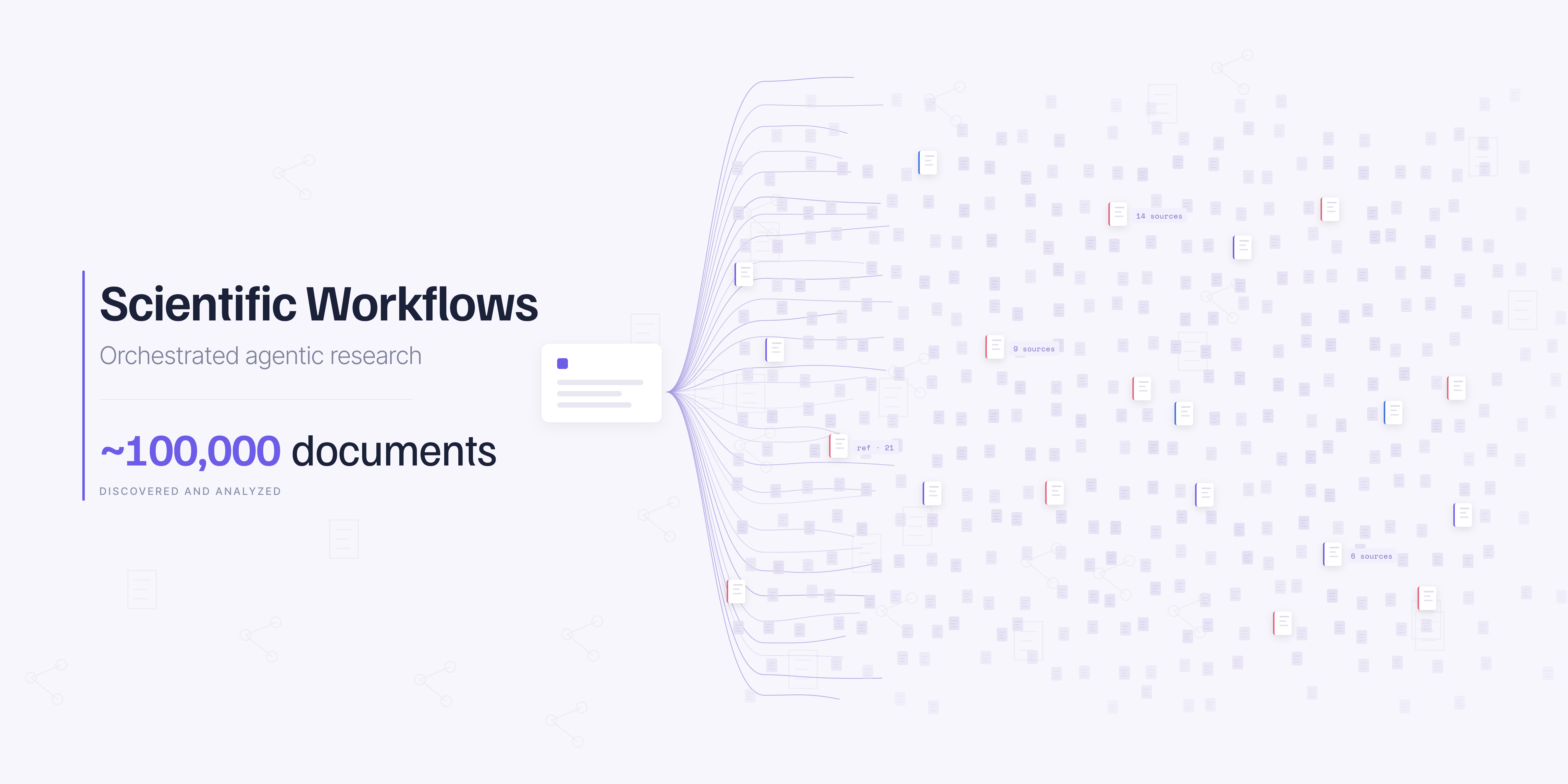
Once retrieval is strong enough – page-level, recall-focused, and spanning both public and private sources – the bottleneck moves to reasoning. This means that when a user gives an instruction, and the system pulls 100s of relevant documents, passages of text, tables, and images, how does it decide what to do next, and how does it show that process to the user?
What is reasoning?
Thinking covers exploration, imagination, reframing a problem, and proposing new ideas. Reasoning is the disciplined subset that operates under constraints. It takes a defined instruction, plans a process, retrieves and structures information along the way, and combines the evidence into a conclusion that another expert can follow, critique, and reproduce.
This is easy to illustrate by contrasting two instructions. A retrieval-style question might be: “What is the prevalence of lupus?” The system locates the right epidemiology sources and summarizes the range, ideally stratified by geography or population. A reasoning-style instruction goes further, for example: “Construct composite endpoints for measuring disease progression in a rare indication.” There may be no canonical answer in the literature.
Thus, the system must infer how the disease is currently measured, scan related diseases and adjacent endpoints, combine what it finds into plausible composite measures, and then state the assumptions and limitations that underpin that proposal. The output is an evidence-based opinion with a clear boundary of validity, grounded in but not limited to existing facts.
For Example: NSCLC biomarkers and an explicit plan
The same distinction appears in a concrete instruction we run inside Causaly:
“In patients with non-small cell lung cancer (NSCLC), which molecular, genetic, and protein biomarkers are associated with disease progression, and what is the strength of evidence supporting their prognostic value? Summarize key biomarkers, mechanisms, and validation status in a table.”
A pure retrieval system returns a cluster of papers on EGFR, KRAS, PD-L1, TP53, ALK, and others, and perhaps a narrative that mentions some of them. A reasoning system with an explicit planning layer behaves differently. Internally, the agent first restates the task and sketches a plan: focus on prognostic biomarkers for progression in NSCLC; identify the main molecular, genetic, and protein biomarkers; for each one, gather data on mechanisms and study designs; rate the strength of evidence; and assemble a table with biomarker, mechanism, and validation status.
Only then does it call tools such as the Bio Graph over NSCLC progression biomarkers and run targeted searches for the top biomarkers. The final output is a table where each row corresponds to a biomarker, with columns for mechanism, type of evidence, and a qualitative assessment of prognostic strength, all linked back to specific pages in the underlying studies. This is scientific reasoning in practice: an explicit plan, executed against the instruction, that produces reviewable artefacts rather than a single pass over a context window.
.png)
Where AI reasoning fails – and why planning matters
When we evaluate general-purpose LLM systems on these tasks with pharma partners, the same failure modes appear.
- Factual grounding is incomplete or distorted: critical studies are omitted, negative findings are underrepresented, or key details such as model, dose, line of therapy, or patient segment disappear in the synthesis.
- Logic is weak: non-comparable studies are treated as aligned, results are extrapolated across species or populations without qualification, exploratory endpoints are promoted to firm conclusions.
- Assumptions stay buried in the prose, so extrapolations and alternative choices cannot be inspected.
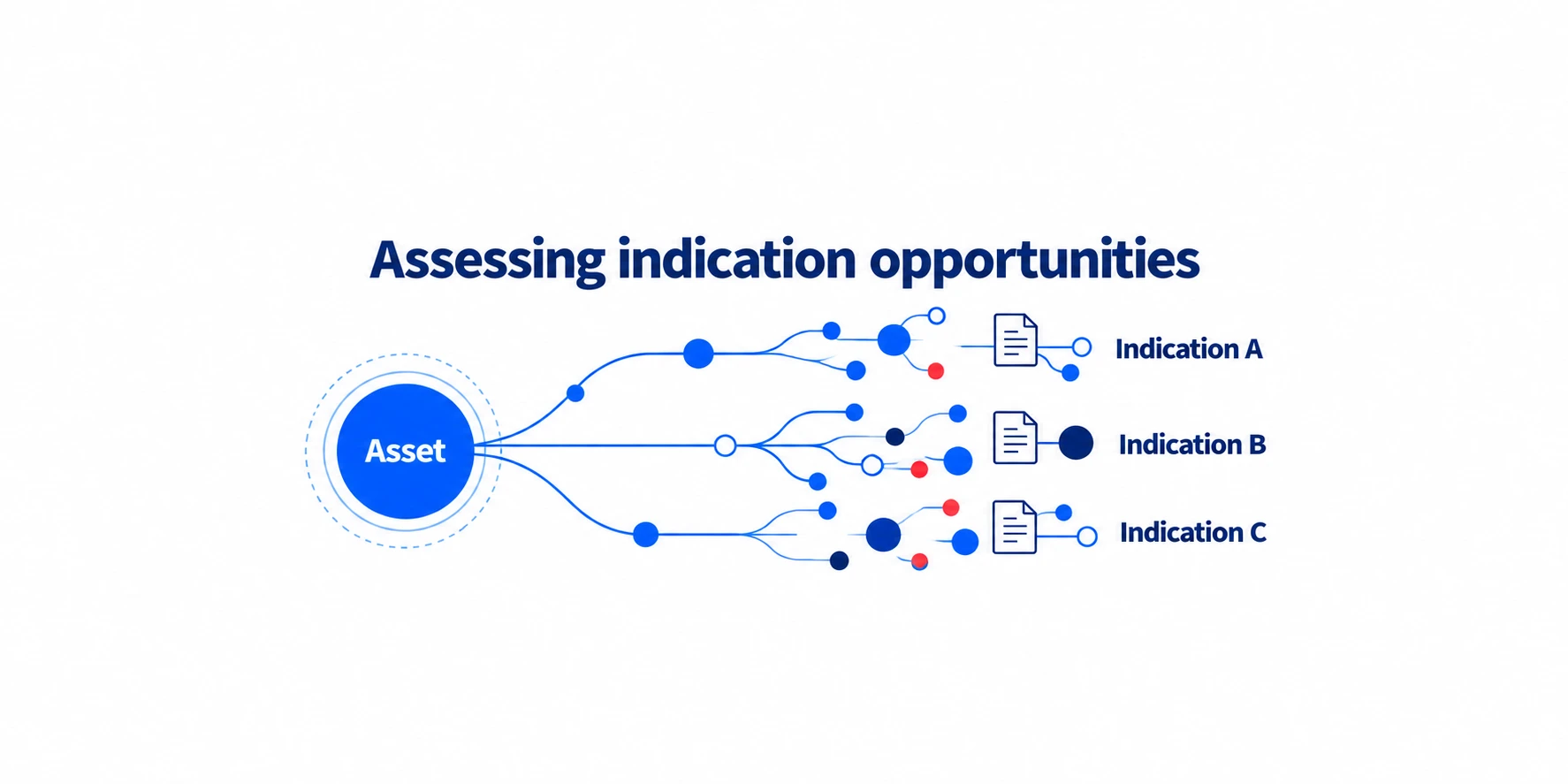
All of these issues reflect a missing plan. Once retrieval has produced a candidate set of pages, a reasoning system must break the question into sub-questions, define the evidence dimensions that matter for each one, choose which tools and corpora to use at each step, and specify the intermediate artefacts that must exist before any final narrative appears. In practice this means separating the main evidence dimensions for a workflow (for example mechanism of action, exposure–response, toxicity, comparators), representing each study in a structured way, aligning those studies in tables where design differences are explicit, and tracing conflicts back to those differences. Only then does it make sense to generate a scientific narrative that refers to the tables and states where extrapolation and judgment are involved.
Without this kind of explicit plan, the model has no reason to generate tables, assumption logs, or limitation sections. It simply optimizes for a plausible-looking answer.
How to measure the quality of scientific reasoning
To make reasoning systematic, it has to be measured. A five-dimensional lens is often effective for measuring the quality of scientific outputs:
- Factuality: Accuracy with page-level grounding; each major claim links to specific passages in full text, internal reports, or protocols.
- Depth of Analysis: Outputs connect preclinical, clinical, mechanistic, and real-world signals, and explain how these layers reinforce or weaken a hypothesis.
- Argument Structure: The path from question to conclusion is visible, with clear indications of which studies carry more weight and why.
- Assumption Transparency: Extrapolations, surrogate endpoints, and model choices appear in a dedicated assumptions section with short rationales.
- Limitation Disclosure: Gaps, conflicts, and data quality issues are made explicit, with concrete next steps where possible.
.png)
What R&D leaders should demand from “reasoning” systems
When evaluating agentic or deep-research systems, it is useful to shift the focus of demos and pilots toward how the answer was produced, not just how it reads. Ask to see the investigation plan the system executed for a representative workflow. Examine the evidence tables, study summaries, assumption logs, and limitation lists that underpin the final narrative, much as you would read the Methods section of a scientific paper to qualify its conclusions. Look for major claims that map back to a small and stable set of page-anchored citations, and check whether the analysis can be rerun or adapted when the question is modified.
Retrieval ensures the system is reading the right material. Planning and reasoning determine whether the output rises to the standard required for internal scientific review and real decision-making.
Further reading

.png)

.png)
.png)




Get started with Causaly
Ready to transform the way your R&D teams discover and deliver? Take the first step - see Causaly for yourself.
Request a demo