An AI Scientist Is Proven by the Science It Produces
An analysis of patient responders and nonresponders can contain the right data, methods, evidence, and citations and still reach the wrong conclusion. Building a trustworthy AI scientist requires calibrating the complete system against one key scientific outcome at a time.
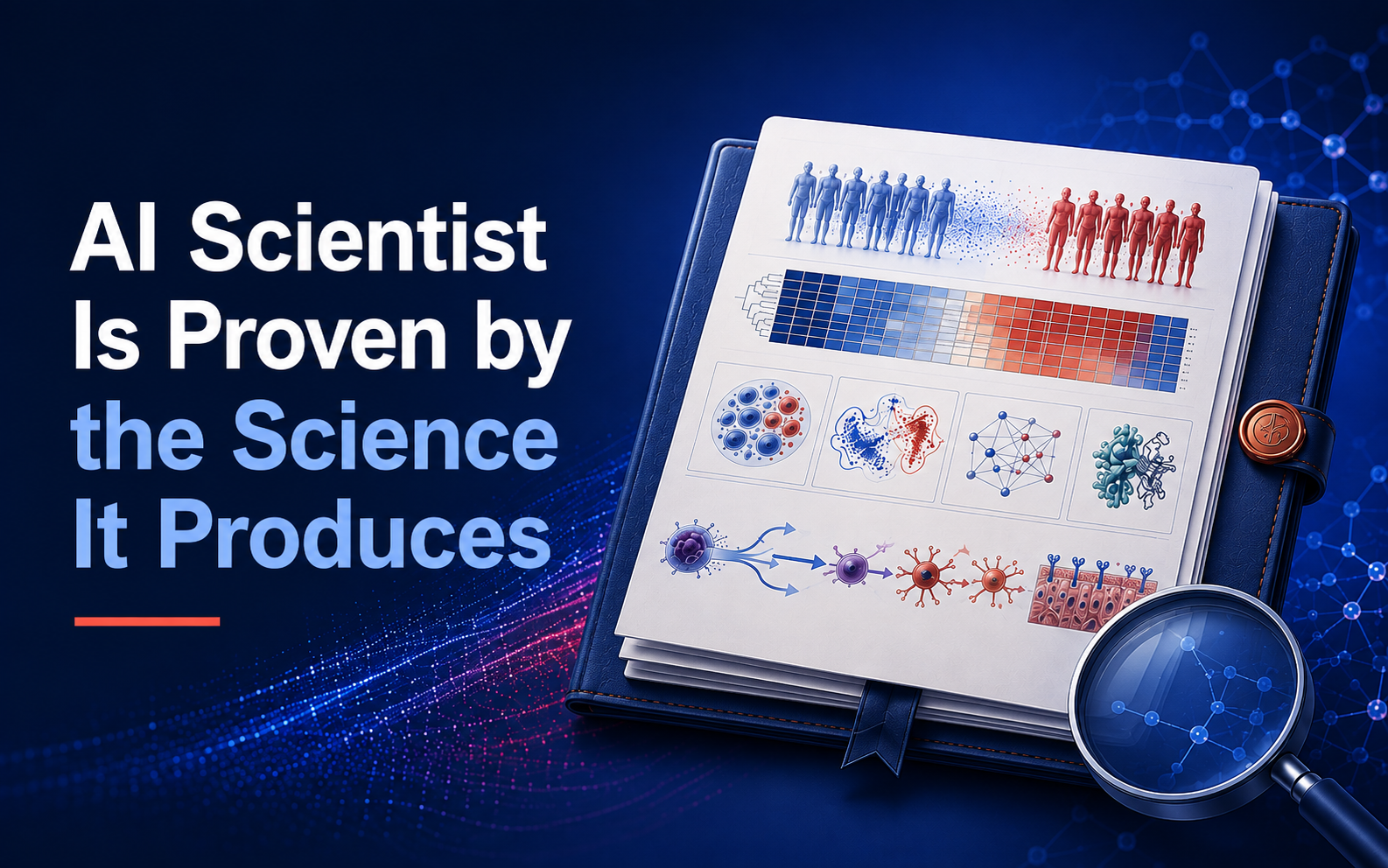
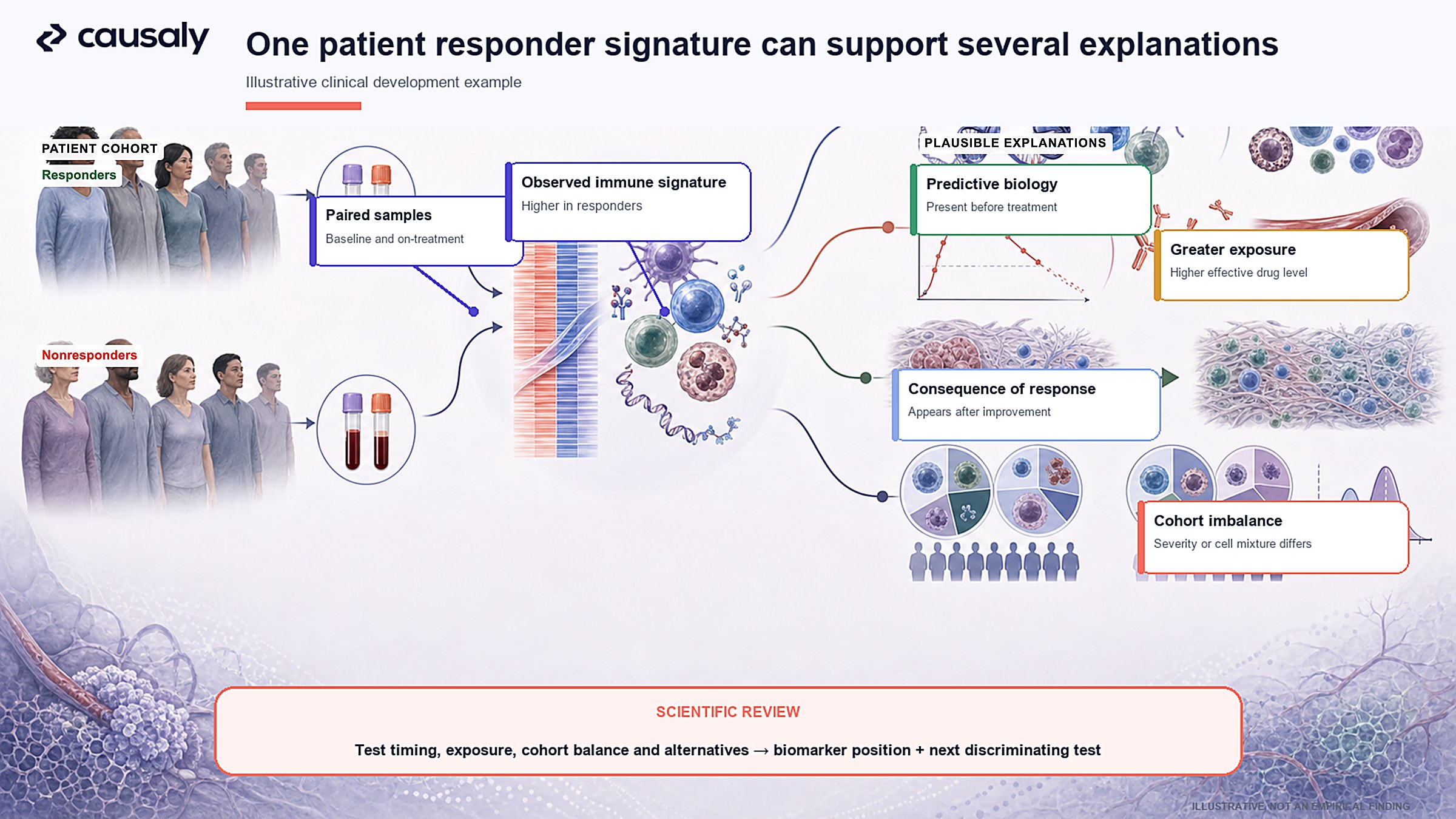
Picture a typical clinical development review. A team asks an AI system to explain why some patients responded to a therapy while others did not. The system combines baseline and on-treatment molecular data with exposure, clinical endpoints, internal reports, and published evidence. It finds an immune signature enriched in responders, calls it a treatment-predictive biomarker, proposes a plausible mechanism, and recommends using the signature to select patients in the next study. The report looks complete because the data sources, statistics, interpretation, citations, and provenance are all present.
But the gaps appear when clinical, translational, and biomarker leaders review the report, or when it reaches a governance board with Chief Medical Officer accountability. It raises the questions: Was the signature present before treatment? Did responders receive greater effective exposure? Does the signal predict benefit from this therapy, or does it identify patients with a better prognosis in general? These questions reveal that the system selected one plausible explanation from many before testing the alternatives. Access to all the relevant data did not mean that the system investigated the different explanations that could fit the observation, which makes the completed scientific work too weak for a biomarker or trial decision.
The quality of an AI scientist cannot be inferred from its components. It must be established through completed scientific work.
Data access, graphs, models, tools, agents, and provenance show that the ingredients exist. Completed scientific work shows whether those ingredients operate together at the standard required for a real R&D decision.
Architecture becomes useful when it is calibrated to the scientific work
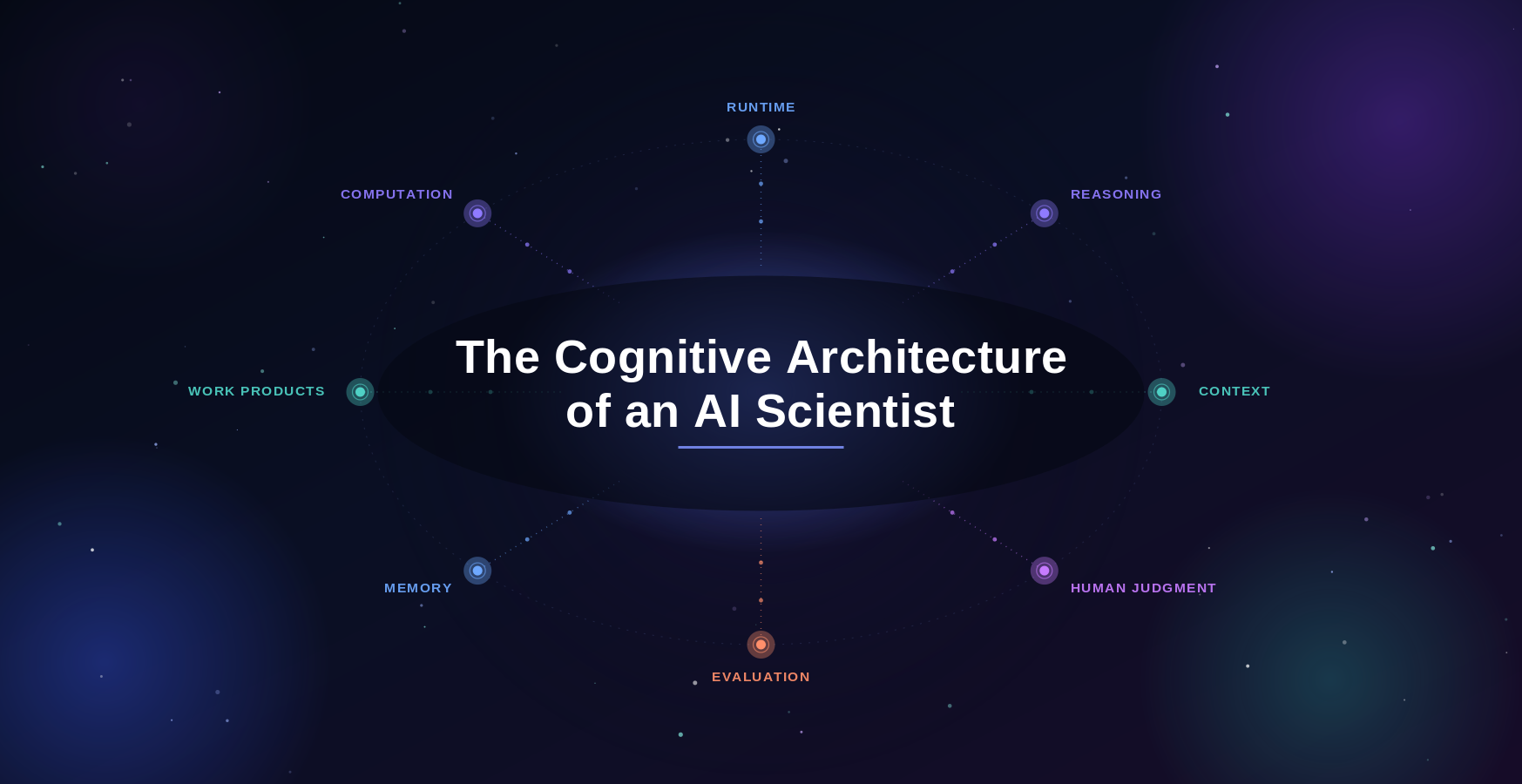
In the patient responder example, the architecture has to preserve cohort and endpoint definitions, run the appropriate analysis, compare explanations, carry uncertainty forward, and produce a reviewable artifact. The previous essay described these responsibilities as runtime and control, scientific cognition, scientific judgment, and reviewable work products.
The scientific harness encodes how those parts behave for this work. A generic evaluator may approve a complete and well-cited report. A scientifically calibrated evaluator asks whether timing, exposure, prognosis, and competing mechanisms have been addressed before the biomarker claim advances.
The same is true of memory. A later conclusion is only valid if the system still knows how response was defined, which patients were excluded, what was adjusted for, and why an alternative explanation was rejected.
The architecture defines the responsibilities of the complete system. The scientific objective defines the required behavior and quality bar. This follows the wider distinction that computation and interpretation place different demands on an AI scientist.
Design top down, build bottom up for scientific depth
The top-down view defines the complete AI scientist. The bottom-up build starts with one scientific output that must meet a real expert bar.
The first build target should be the complete patient responder analysis rather than a collection of generic capabilities. The objective is a defensible explanation of differential response, credible biomarker hypotheses, and the next analysis or experiment that can distinguish between the remaining explanations.
That objective creates a scientific work loop: the system moves from patient data and context through analysis, interpretation, and revision to a reviewable scientific position. If exposure offers a better explanation than biology, the system must return to the data rather than complete the original story.
When the loop meets the scientific expert bar, the team has evidence that the necessary capabilities work together for that task. The result does not prove general scientific intelligence. It proves that the system can complete one key piece of scientific work.
This depth is what creates enterprise value. A broad system can demo patient responder analysis, target prioritization, and safety assessment while remaining shallow in each. Breadth shows what a system can attempt; depth shows what scientists can trust it to complete.
Architecture should be designed top down, and reliable capability should be built from the bottom up.
Validated work loops create composable scientific building blocks
A useful analogy is a set of LEGO blocks. To complete the patient responder loop, the AI scientist needs a working combination of scientific planning, method selection, hypothesis comparison, evaluation, state and provenance, and a reviewable work product. Building the loop creates and calibrates those modular capabilities.
The next loop should reuse the blocks that already work and add only what the new scientific objective requires. A PK/PD-to-dose loop can reuse hypothesis comparison, scientific evaluation, provenance, and review, while adding exposure-response methods. An omics-to-target loop can reuse the same structure while adding omics analysis and target evidence assessment.
Each new loop tests whether the blocks are genuinely reusable or merely overfitted to the first example. Successful blocks enter a growing library of validated scientific capabilities; weak ones are adapted before they are reused.
As this library grows, each new loop should take less time and less manual work to build. The team still defines the scientific bar for the new task and verifies that the assembled blocks meet it.
Executive evaluation should begin with completed scientific work
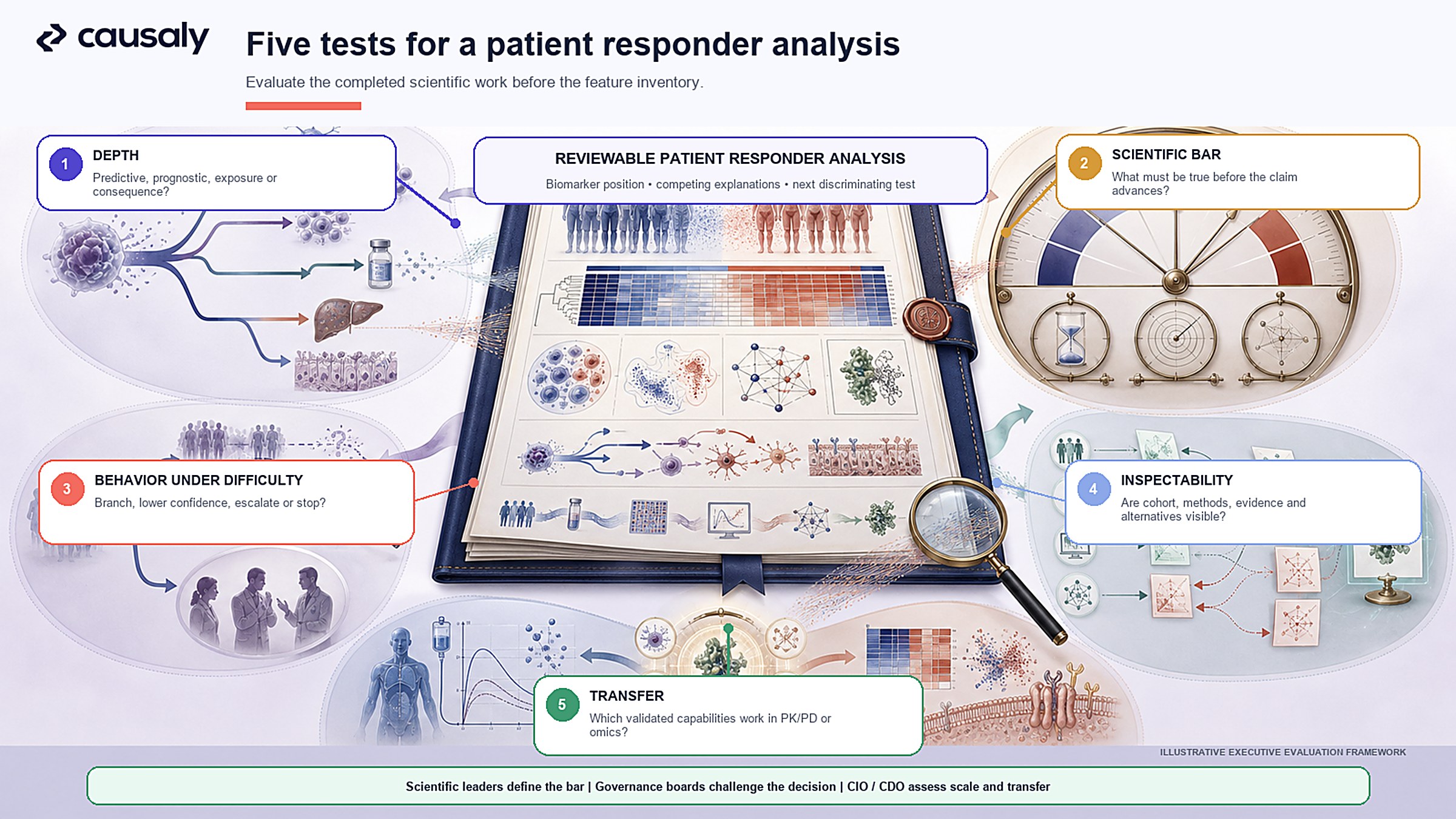
An executive evaluation should begin with the patient responder report, not the vendor's architecture diagram or capability map. Ask the system to explain the observed difference, show the alternatives it considered, and identify what evidence would change its position.
1. Depth: Can it distinguish a treatment-predictive biomarker from prognosis, exposure, or a consequence of response? Review the complete work product rather than separate demonstrations.
2. Scientific bar: Who defined what must be true before the biomarker claim advances? The answer should expose the evidence and uncertainty that matter for the intended clinical use.
3. Behavior under difficulty: What happens when exposure data are missing or the subgroup changes under another response definition? The system should branch, lower confidence, ask for expert input, or stop without manufacturing certainty.
4. Inspectability: Can a scientific reviewer reconstruct the path from cohort definition to biomarker claim? Methods, assumptions, evidence, rejected explanations, and human interventions should remain visible.
5. Transfer: Which validated building blocks have worked in a different work loop? This separates a growing AI scientist from both a bespoke application and a broad but scientifically shallow system.
Scientific and technology leaders have different responsibilities. The CMO, CSO, development leaders, and domain experts define the work and the scientific bar. The CIO or CDO evaluates data access, security, integration, governance, and whether validated capabilities can scale.
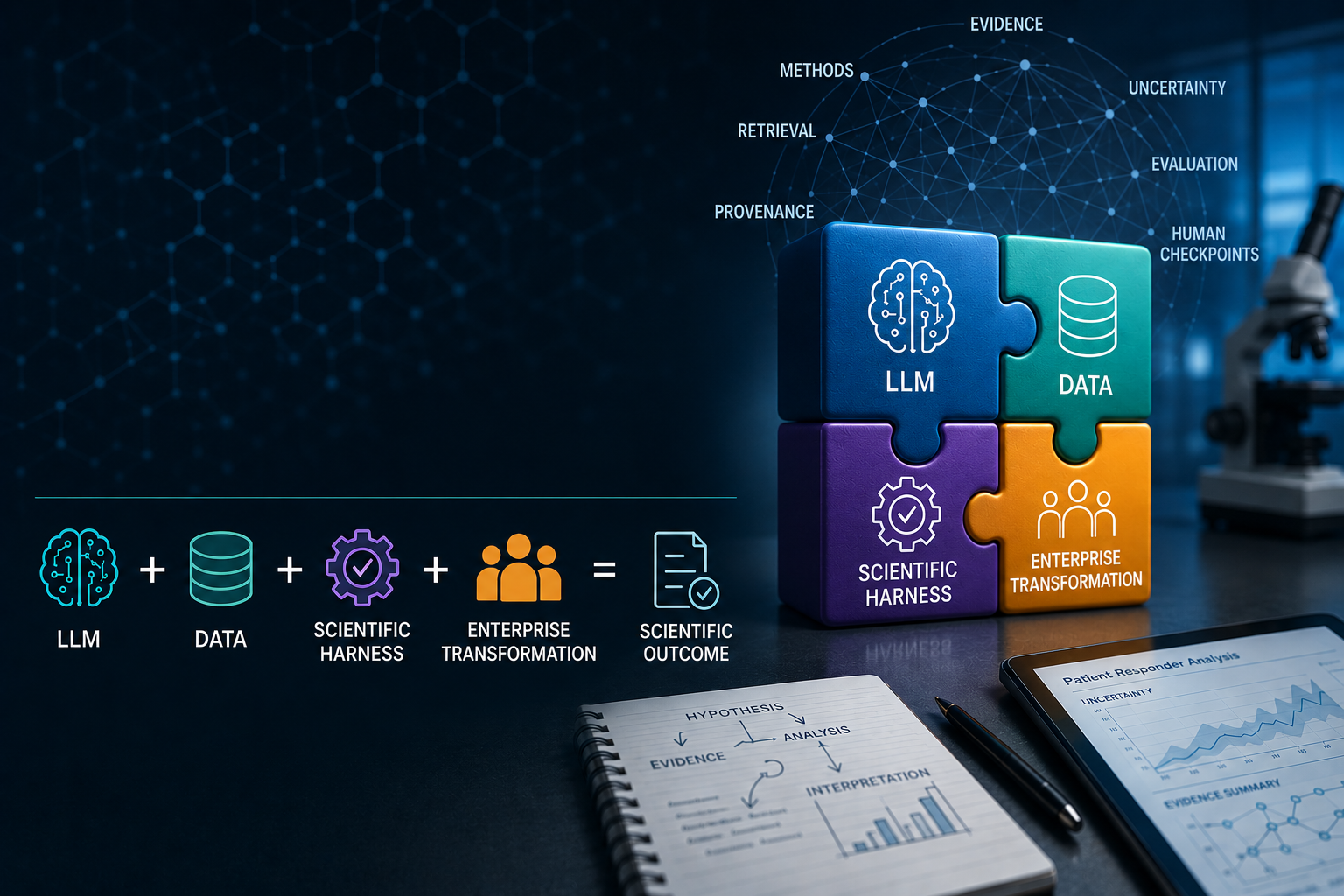
Remember: The original report failed despite its data, analysis, citations, and provenance because the complete system had not been calibrated to the scientific objective. This calibration happens in the scientific harness around the model. The model supplies intelligence and the data supplies context, but neither defines the methods, evaluation, uncertainty management, or human checkpoints required for credible scientific work. The next essay will examine why model plus data is not enough.
An AI scientist becomes effective when its components repeatedly produce scientific work that meets the bar.
Further reading
.png)
.png)


Get started with Causaly
Ready to transform the way your R&D teams discover and deliver? Take the first step - see Causaly for yourself.
Request a demo