Examine the approach
Examine the objective, scope and proposed approach. Use your scientific criteria to shape the task before taking the assessment forward.
Causaly Work combines data analysis, evidence investigation, and scientific outputs into one connected task. It plans the methods and runs every step in the open, while your team sets the direction, challenges the findings, and guides what happens next.
How Causaly Work helps
Describe the task and attach your data. Work plans the methods, runs the analysis, reads the results against scientific evidence and delivers outputs your team can review, with every step open to inspect and challenge.
More capacity for your team
Bring a scientific question and your inputs. These examples show what your team can move forward with Causaly Work.
The difference it makes
Your expertise, throughout
Shape the task as it develops. Examine the approach, challenge the interpretation and refine the work around the questions that matter to your team.
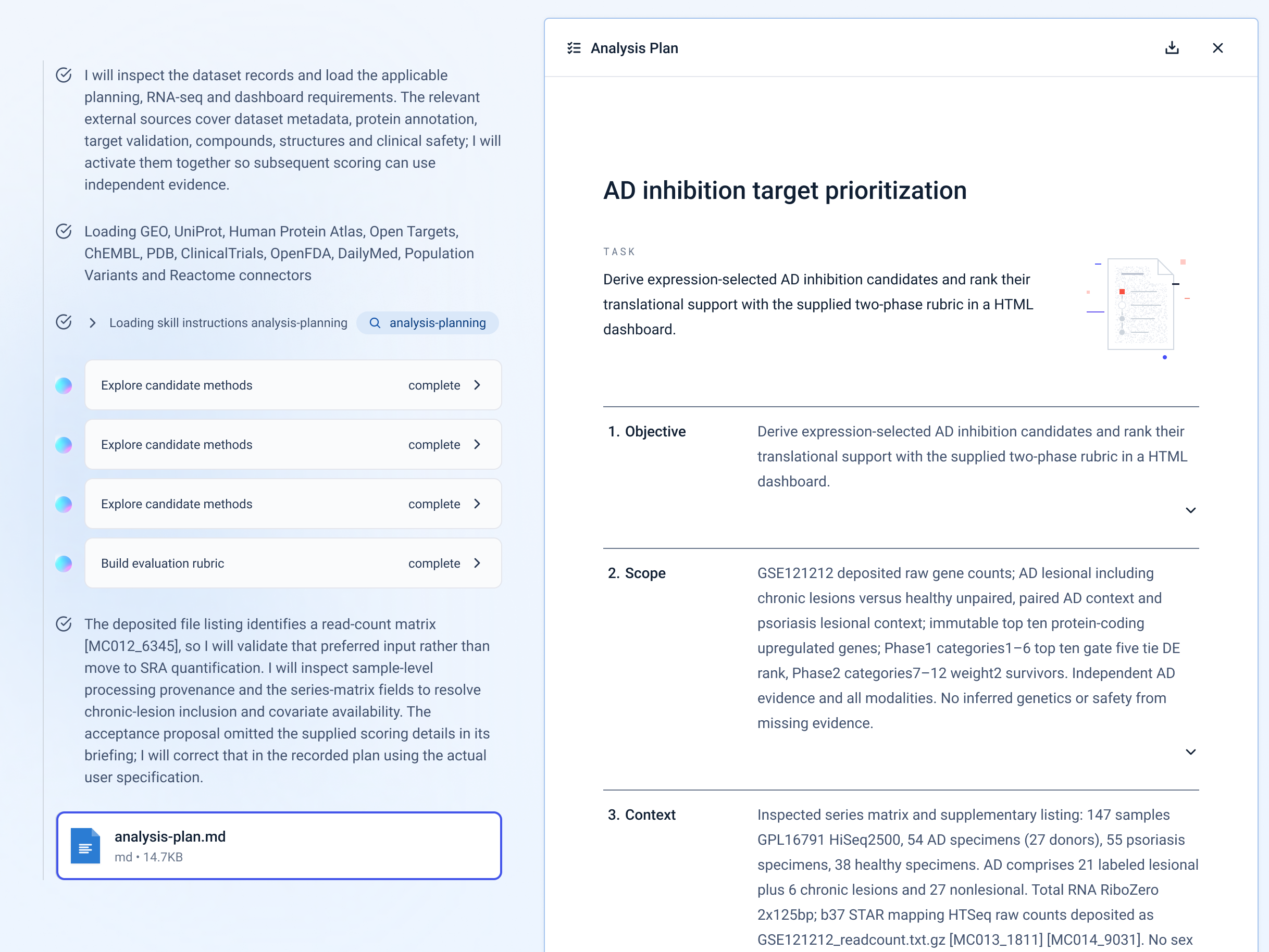
Examine the objective, scope and proposed approach. Use your scientific criteria to shape the task before taking the assessment forward.
Question the initial findings, introduce biological context or ask Work to investigate an alternative explanation. Use that discussion to refine the assessment.
Examine missing evidence and unresolved assumptions alongside the findings. Decide where further investigation or validation is needed.
Carry the work into your next decision
Continue from investigation to outputs your team can inspect and discuss, with the scope and reasoning alongside the findings.
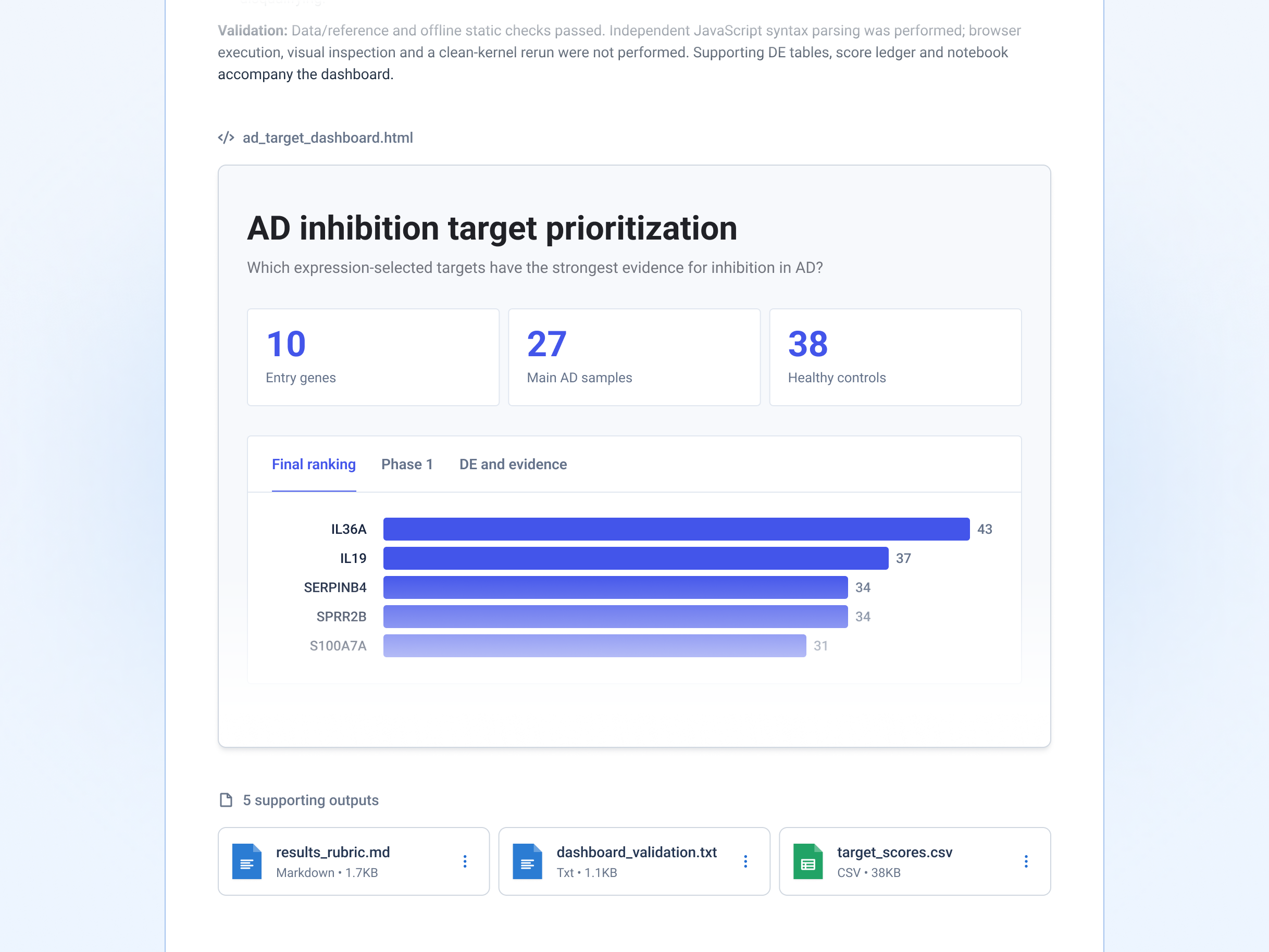
Bring candidate rankings and comparisons into one view so your team can examine the findings and discuss the evidence behind them.
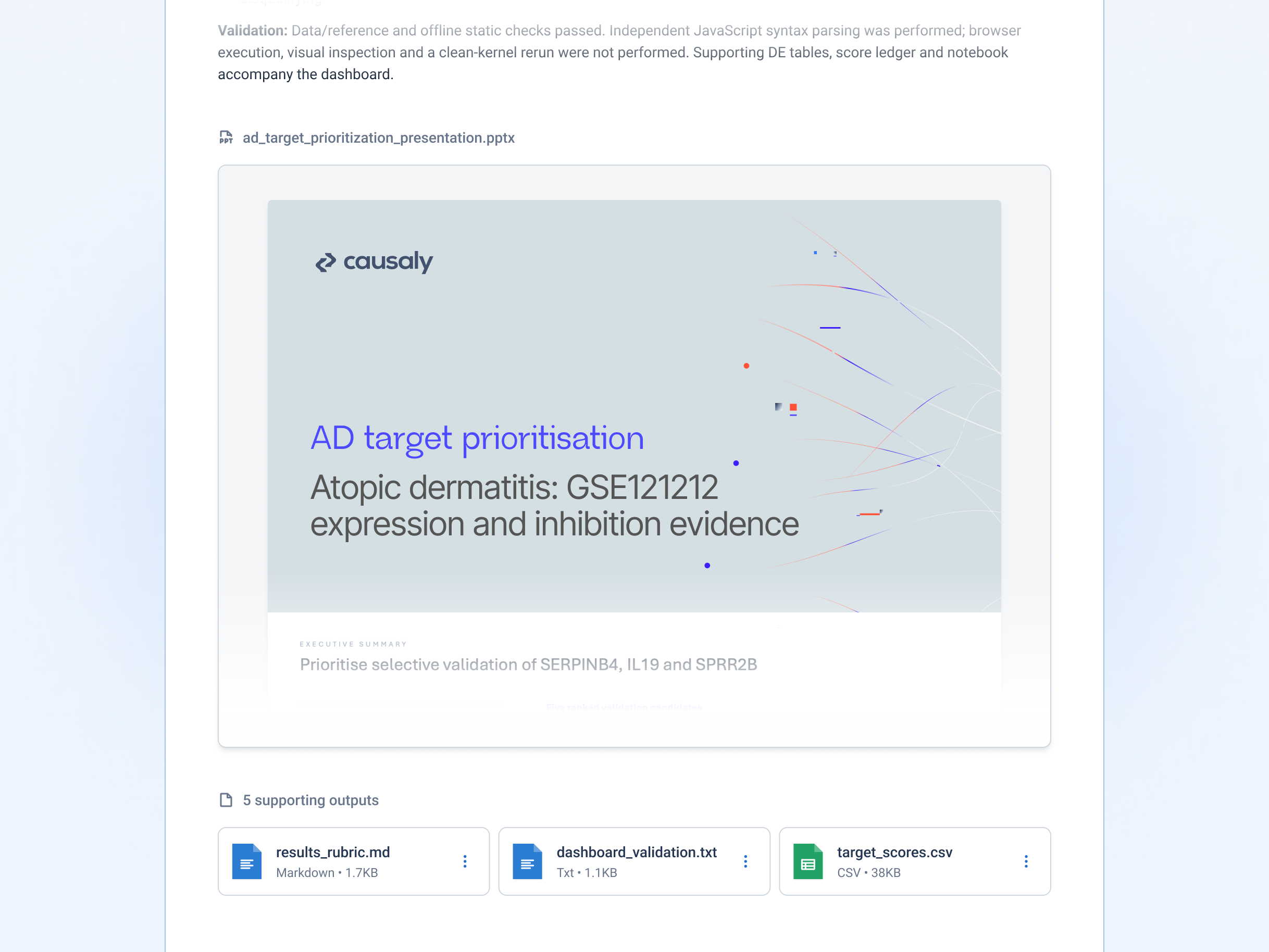
Create a presentation of the scientific question, assessment and rationale for your team to review and refine.
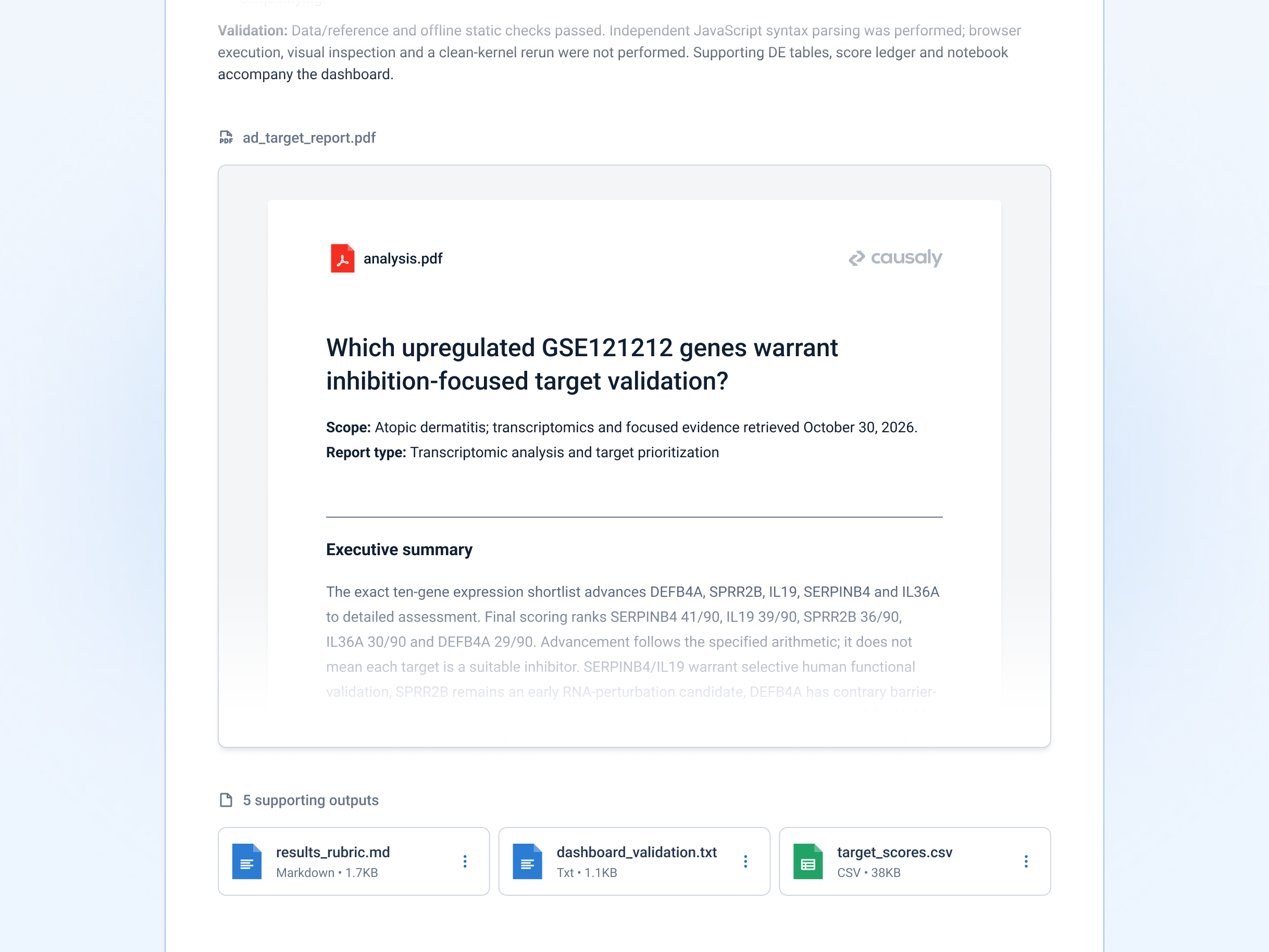
Create a scientific report that brings the scope, findings, reasoning and qualifications together for expert review.
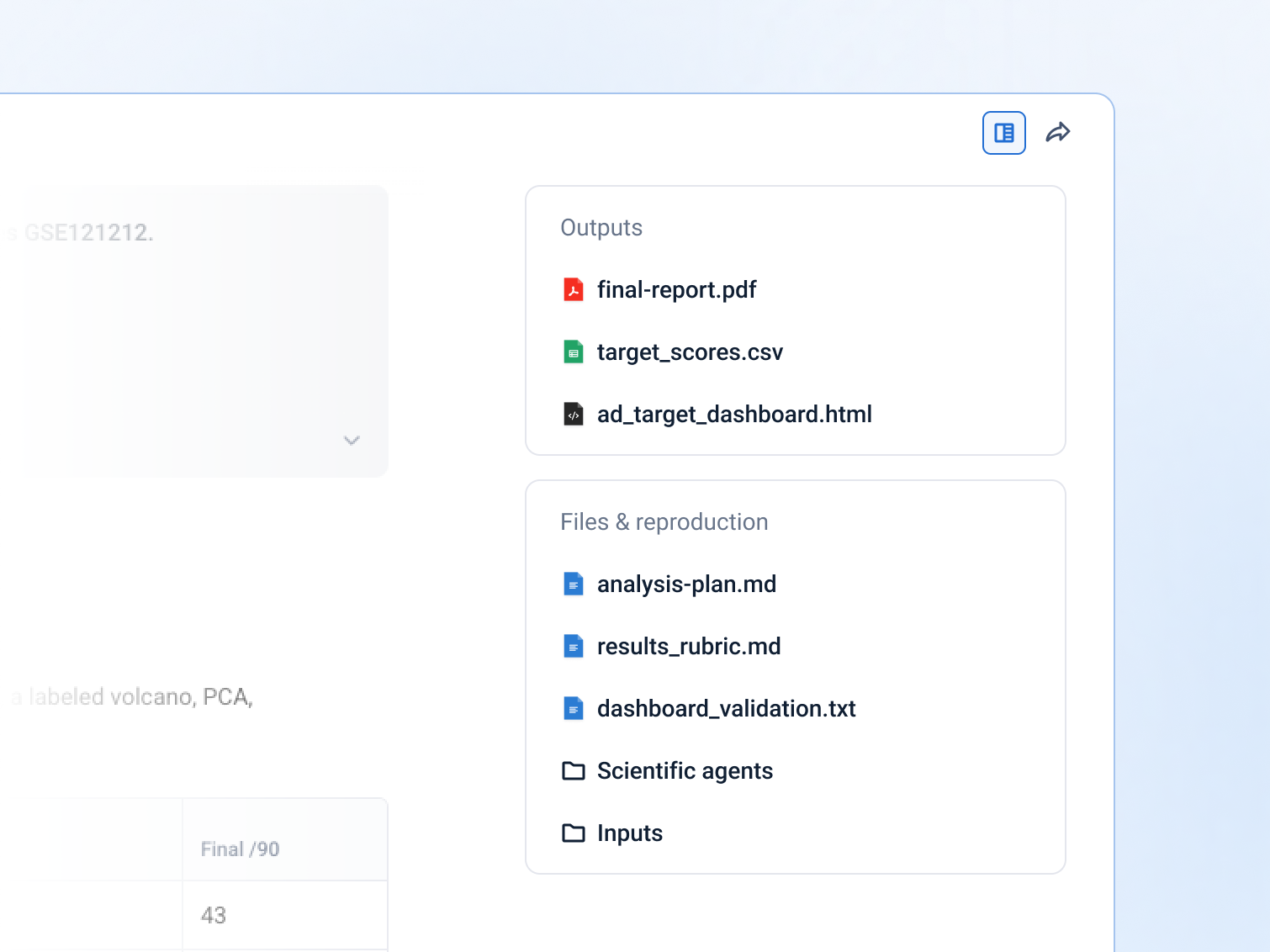
The plan, inputs and supporting files stay alongside the outputs, so anyone reviewing the work can trace how it was done.
Product screenshots show separate example versions, not a single validated result. Rankings differ between views; validation status is shown in the screenshots.
Tasks that combine data analysis, evidence investigation and scientific interpretation, such as target assessment or biomarker trial comparisons. Start with a defined question, relevant inputs and clear scientific criteria.
Scientists can examine the approach, challenge assumptions and investigate alternative explanations throughout the task. Your team guides the work and retains responsibility for scientific decisions.
Reports, presentations or dashboards that bring together the findings, supporting evidence and reasoning. The scope, qualifications and open questions remain visible for expert review.
Use Work when a task spans data analysis, evidence investigation and deliverable creation. Research helps investigate scientific questions, while Scientific Workflows apply established methods to recurring tasks.

Find your first task
Explore how Work could support one of your team’s scientific tasks. Bring a question, available inputs and the criteria that matter.
Request a demo