Eisai & Causaly: From fragmented search to scientific intelligence, embedded in every team
Eisai & Causaly: From fragmented search to scientific intelligence, embedded in every team
Challenges
About Eisai
Eisai is a global research-based pharmaceutical company headquartered in Tokyo, Japan, with a particular focus on oncology and neurology. Their R&D organization spans early discovery, translational science, and clinical development, with teams dedicated to target identification, mechanism-of-action characterization, competitive intelligence, and evidence-based decision-making.
The challenge
Prior to adopting Causaly, Eisai’s research teams faced substantial friction across nearly every stage of scientific evidence gathering. The core problem was the time and cognitive overhead required to turn scattered evidence into actionable insight, rather than any lack of access to literature.
- Fragmented workflows: Researchers switched constantly between PubMed, Google Scholar, internal databases, and manually compiled PDFs. Hours were spent assembling evidence before any analysis could begin.
- Sequential, expert-dependent search: Teams could only process literature one paper at a time. Hypothesis formation was slow, and the breadth of any search was constrained by individual domain expertise, creating blind spots outside a researcher’s immediate area.
- Siloed mechanistic data: Toxicity and mechanism-of-action information lived across disconnected platforms. Connecting compound effects, MOA annotations, and safety signals required significant manual effort and introduced risk of missed connections.
- Slow target prioritization: When faced with large lists of candidate molecules, teams lacked a fast way to assess which were genuinely associated with a disease target. Understanding novel molecules required days of ramp-up, which slowed the entire discovery cycle.
How Causaly Helped

Transforming Eisai’s approach to evidence-based research
Causaly transformed Eisai’s approach to evidence-based research by unifying literature search, mechanistic insight, and hypothesis validation into a single, citation-transparent platform. Researchers across oncology and neurology could move from question to insight in a fraction of the time it took before, without sacrificing rigor. The following is how Eisai benefited from using Causaly.
- Literature & evidence search: Rapid, citation-transparent search replacing fragmented PubMed/Googleworkflows across oncology and neurology teams.
- Hypothesis & target discovery: Accelerated hypothesis formation and target identification, surfacing unexpected molecular associations that sequential paper reading would miss.
- Mechanism of action & toxicity analysis: Consolidated MOA and multi-system toxicity data into unified,connected evidence views, replacing multi-platform manual relationship-building.
- Competitive & evidence assessment: Automated evidence summarization enabling faster preparation forinternal review discussions.
- Agentic research: Early ideation, biomarker exploration, and safety signal monitoring, replacing days-longstarting points for deep scientific questions.
- Scientific review: Eisai proposed using Causaly to review internal scientific proposals and flag unsupported orhypothetical claims, elevating it from research aid to scientific checkpoint.

Research Workflow with Causaly
- Starting point: Researchers open Causaly with a scientific question in mind (a new target, a safety signal, or a competitive hypothesis) and get structured, citation-backed answers immediately.
- Evidence synthesis: Relevant literature is surfaced with visible references, letting teams assess evidence breadth and quality across multiple dimensions at once rather than paper by paper.

3. Hypothesis & target validation: Discovery teams interrogate the evidence landscape to pressure-test emerging hypotheses and surface associations that would be easy to overlook in a linear search.
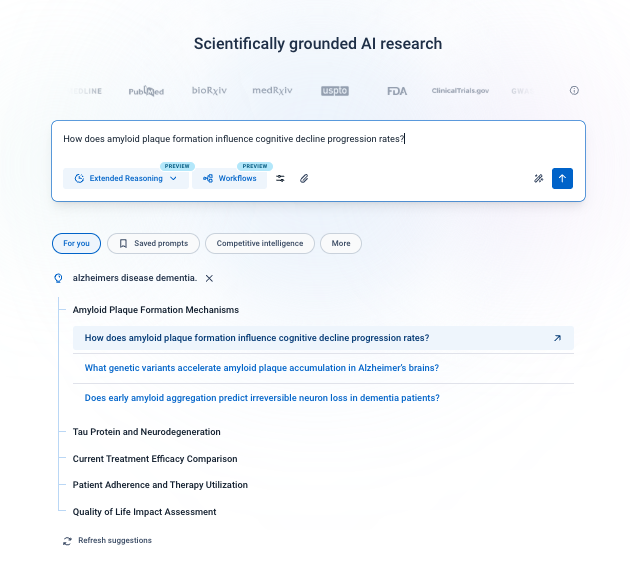
4. MOA & toxicity mapping: Mechanism teams bring together compound effects, MOA annotations, and safety signals in one place, making it straightforward to trace relationships that previously required work across multiple databases.
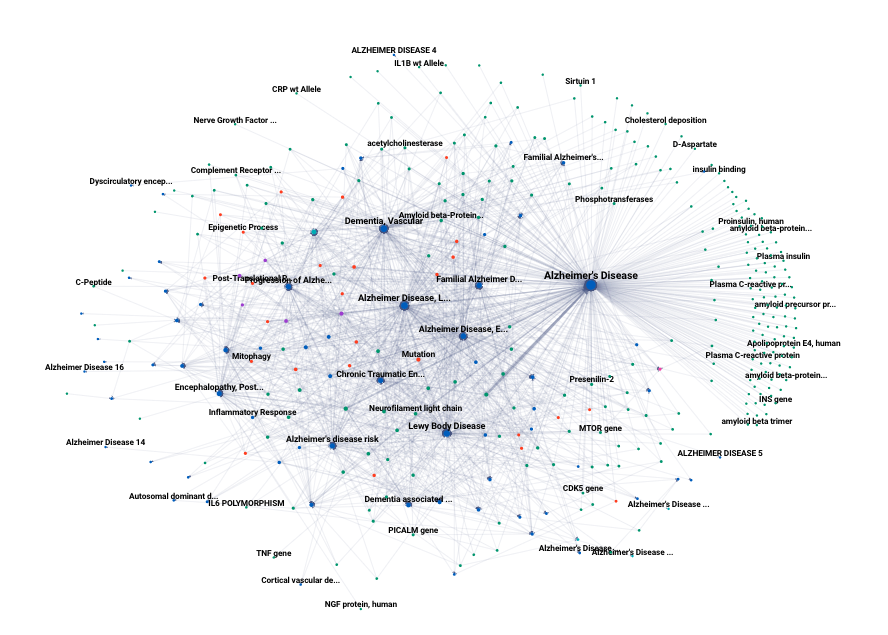
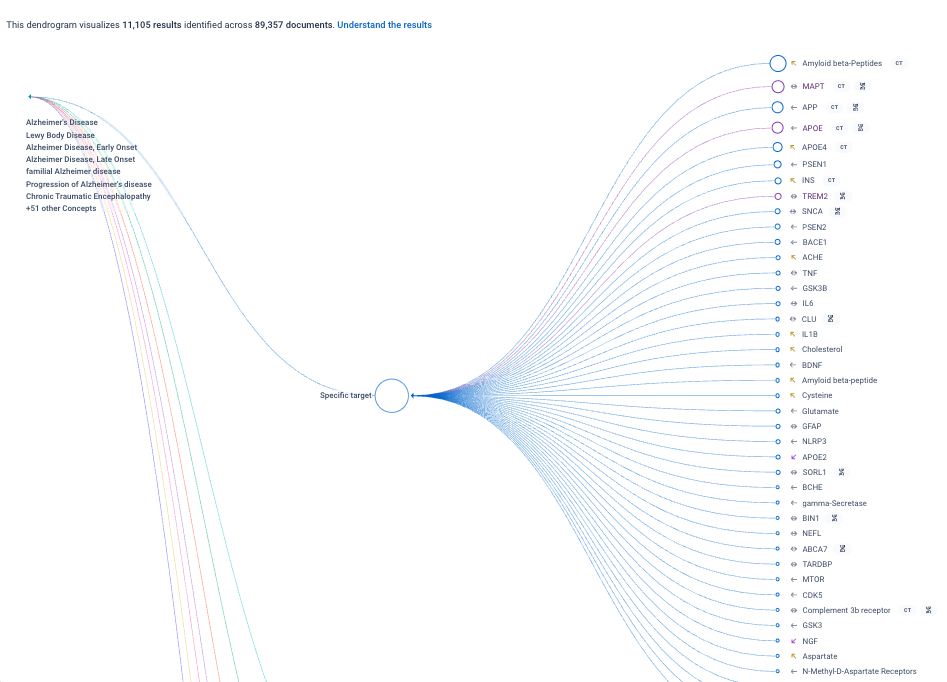
5. Competitive assessment: Evidence review teams rapidly scan and summarize the literature, arriving at internal discussions prepared with structured, traceable evidence rather than manually assembled notes.
Strategic Signals & Expansion
The partnership has evolved beyond individual research tasks. Eisai proactively raised the integration of their internal proprietary data with Causaly, with the goal of grounding target prioritization and unmet-need analysis in both published literature and Eisai’s own evidence base.Eisai’s Japan operations signed an expansion driven entirely by internal advocacy. Researchers referred colleagues organically until the team hit its user limit before any formal expansion conversation was needed.
"I use it daily for early ideation, hypothesis validation, biomarker exploration, safety signalmonitoring. It’s become the starting point for the kind of deep scientific questions that used to takedays to get a foothold on."
EISAI SCIENTIST, EARLY DISCOVERY & TRANSLATIONAL RESEARCH, 2026
"Faster literature search vs. PubMed/Google. High confidence due to clearly labeled inlinereferences. Improves search efficiency and hypothesis formulation."
EISAI RESEARCH SCIENTIST, LITERATURE & EVIDENCE REVIEW, 2026
53 -59% time savings reported across literature review tasks and number one starting point for deep, citation-backed research
Causaly became Eisai’s starting point for deep scientific research with 53 -59% time savings reported across literature review tasks. The value is the transformation of scattered literature, mechanistic data, and scientific hypotheses into a repeatable, evidence-backed intelligence workflow for oncology and neurology teams.

“I use it daily for early ideation, hypothesis validation, biomarker exploration, safety signal monitoring. It’s become the starting point for the kind of deep scientific questions that used to take days to get a foothold on.”



Get started with Causaly
Ready to transform the way your R&D teams discover and deliver? Take the first step - see Causaly for yourself.
Request a demo